



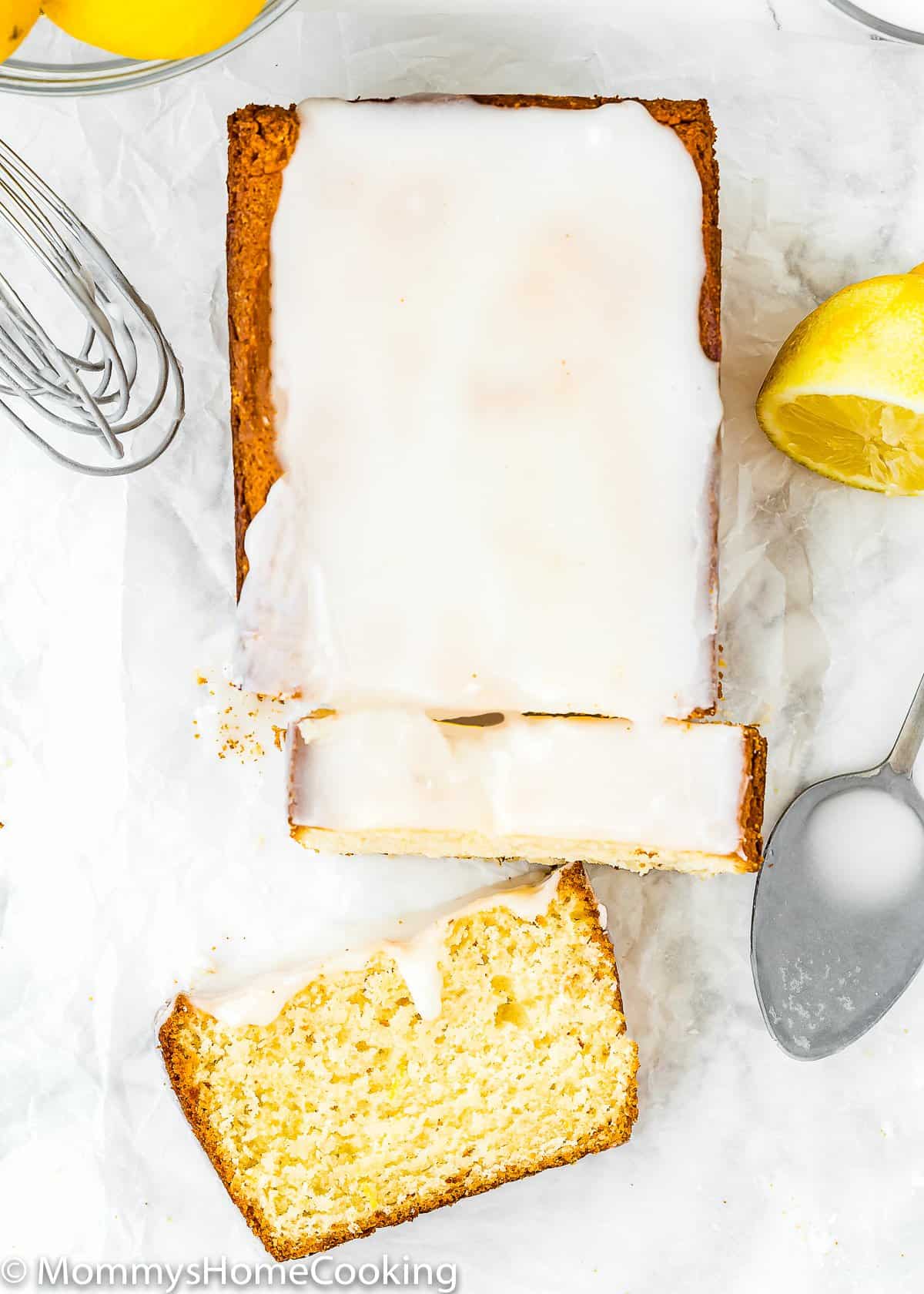
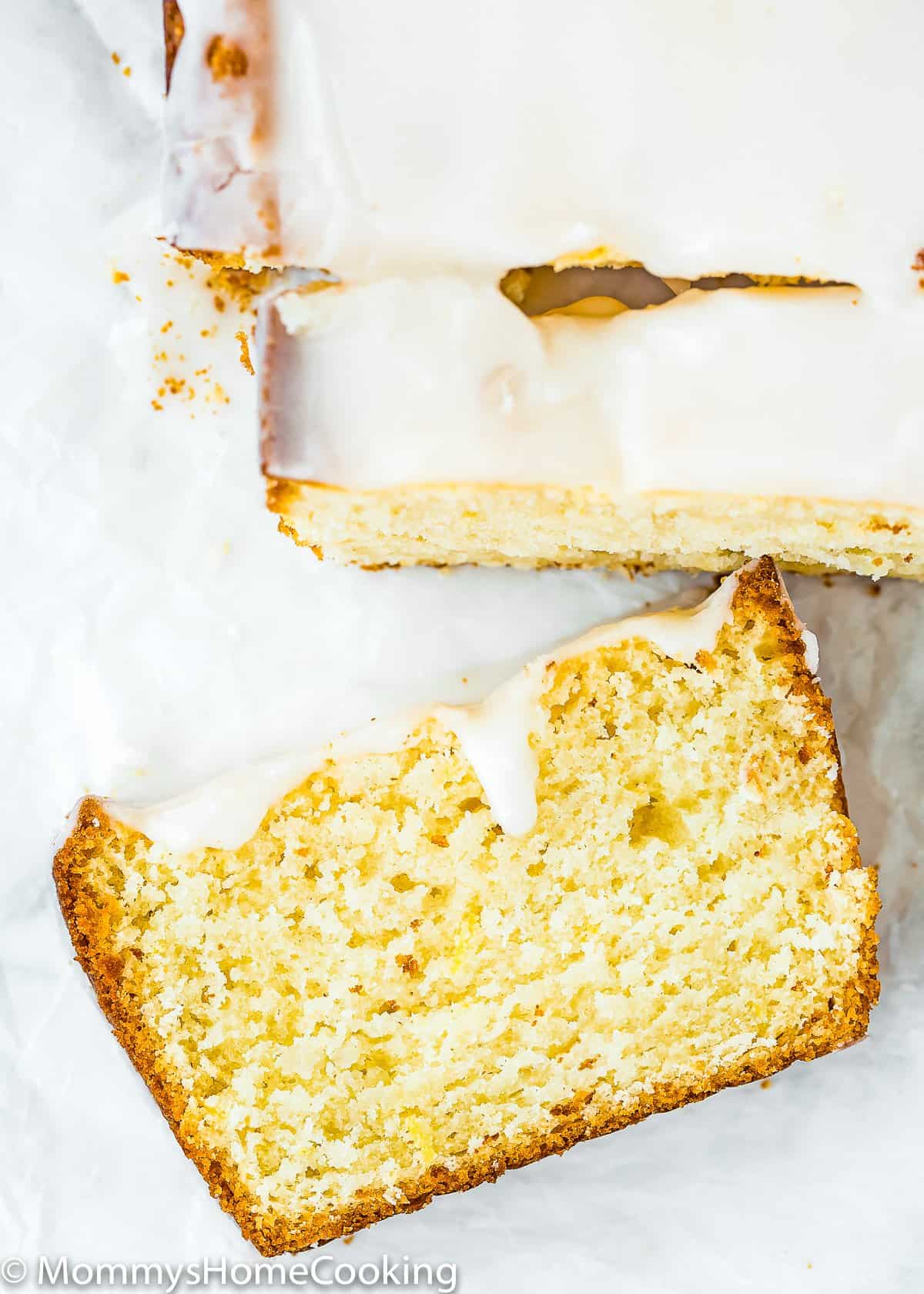
This is the recipe you need to make the Best Eggless Lemon Pound Cake! It’s moist, buttery, and tastes like lemon heaven. Easy to make with simple ingredients.

This eggless lemon pound cake is the ultimate dessert for lemon lovers! Lemon Pound Cake all by itself is superbly delish, but if you want to take it to the next level, glaze it with sugar lemon glaze.
I personally am addicted to this Eggless Lemon Pound Cake … so simple but so good!
Easy Eggless Lemon Pound Cake Recipe Highlights
- It’s fluffy and moist.
- Infused with zesty lemon flavor.
- This recipe is super easy to make.
- Requires just some basic ingredients.
Craving cake instead? Try my Eggless Lemon Cake recipe.
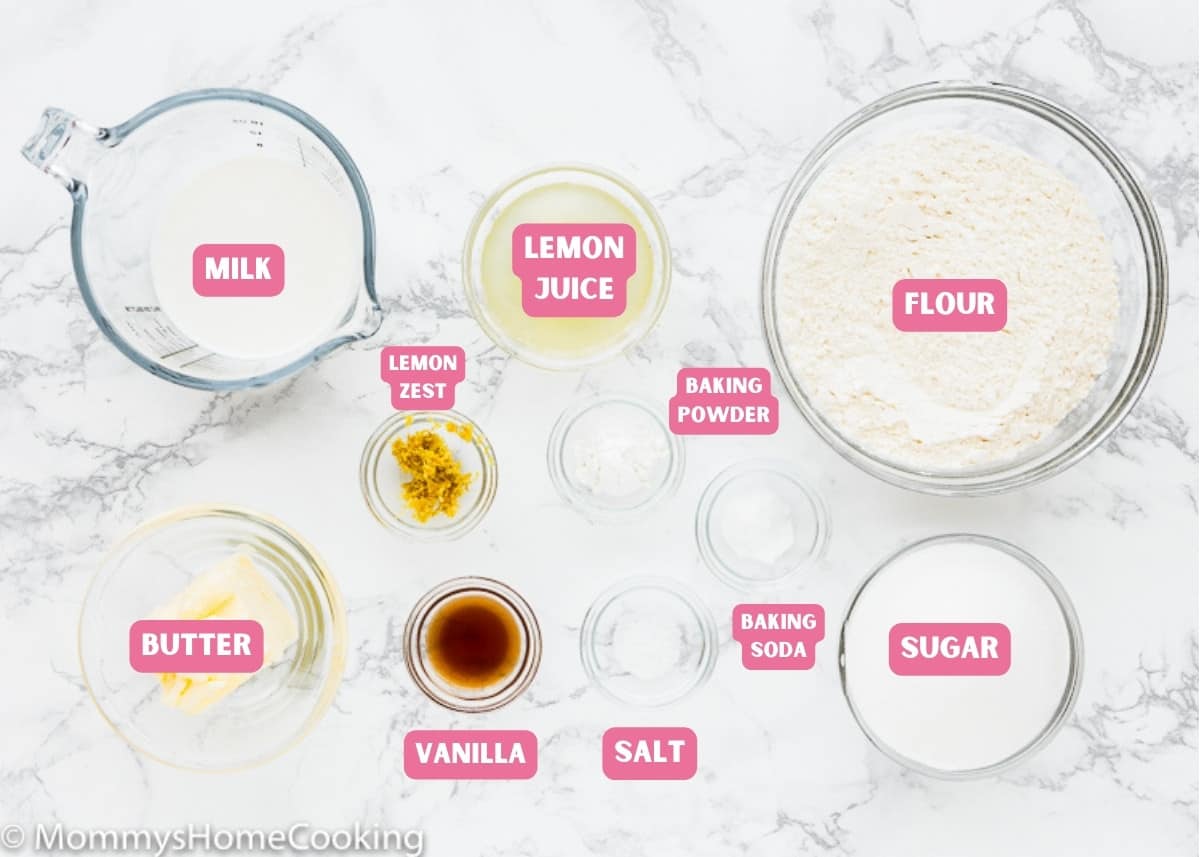
Ingredients Notes & Substitutions
Please check the recipe card at the bottom of the post for exact quantities and detailed instructions (scroll down).
You’ll need:
- Flour: Standard all-purpose flour works best here, skip the cake flour, bread flour and wheat flour.
- Baking powder and Baking soda: Make sure they’re not expired.
- Salt: I prefer kosher or sea salt. If you only have table salt handy, I recommend reducing the amount to half.
- Butter: I prefer to use unsalted butter, but if you only have salted butter handy, you can use it. In this case, skip the salt called in the recipe.
- Sugar: Regular white sugar, also known as caster sugar.
- Fresh Lemons: You’ll need the juice and zest.
- Milk: For baking, I like to use whole milk. However, you can use any milk you have handy.
Step By Step Recipe Photo Tutorial
Please check the recipe card at the bottom of the post for exact quantities and detailed instructions (scroll down).
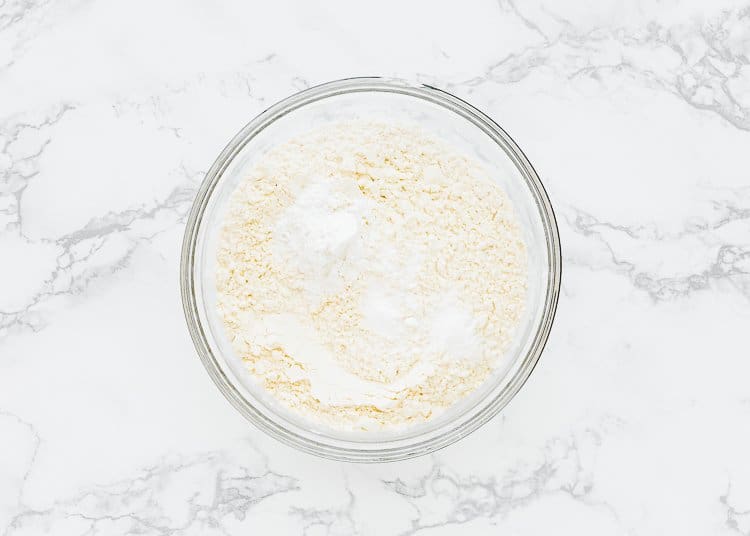
1 – Sift the dry ingredients into a bowl.
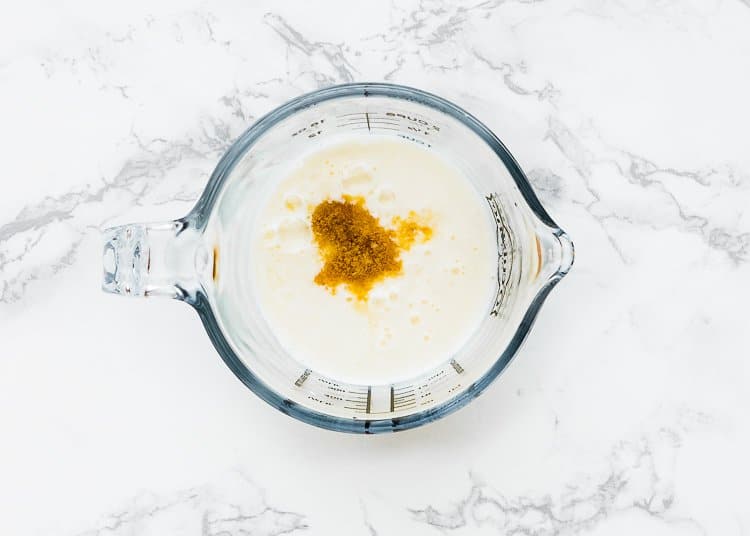
2 – Mix lemon juice and milk.
3 – Beat butter, then add sugar: Beat room temperature butter until smooth, then beat in granulated sugar until creamed and pale. Add lemon zest.
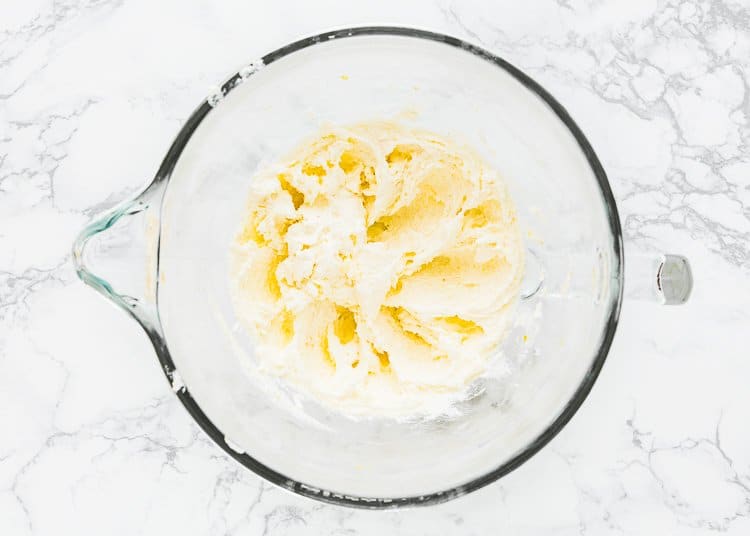
4 – Beat in wet ingredients.
5 – Add flour mixture.
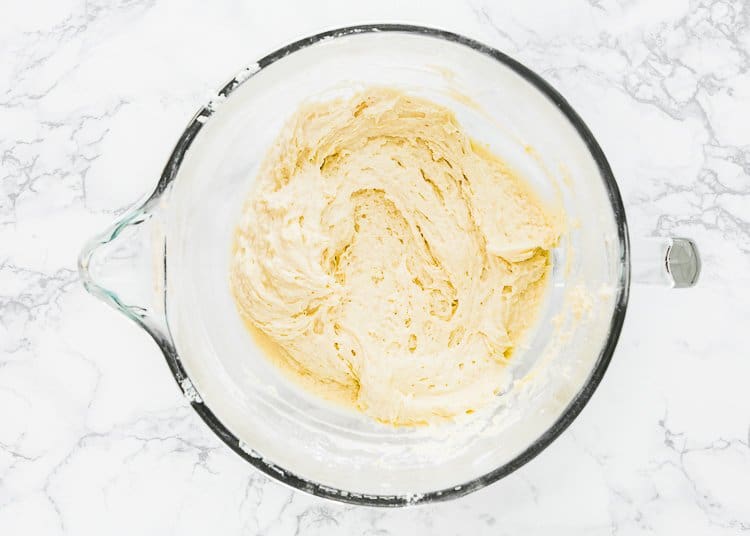
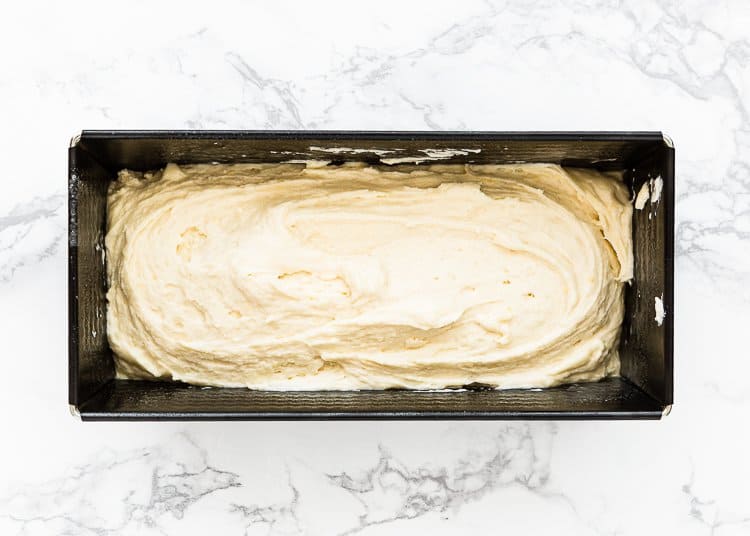
6 – Spoon/spread batter into greased loaf pan.
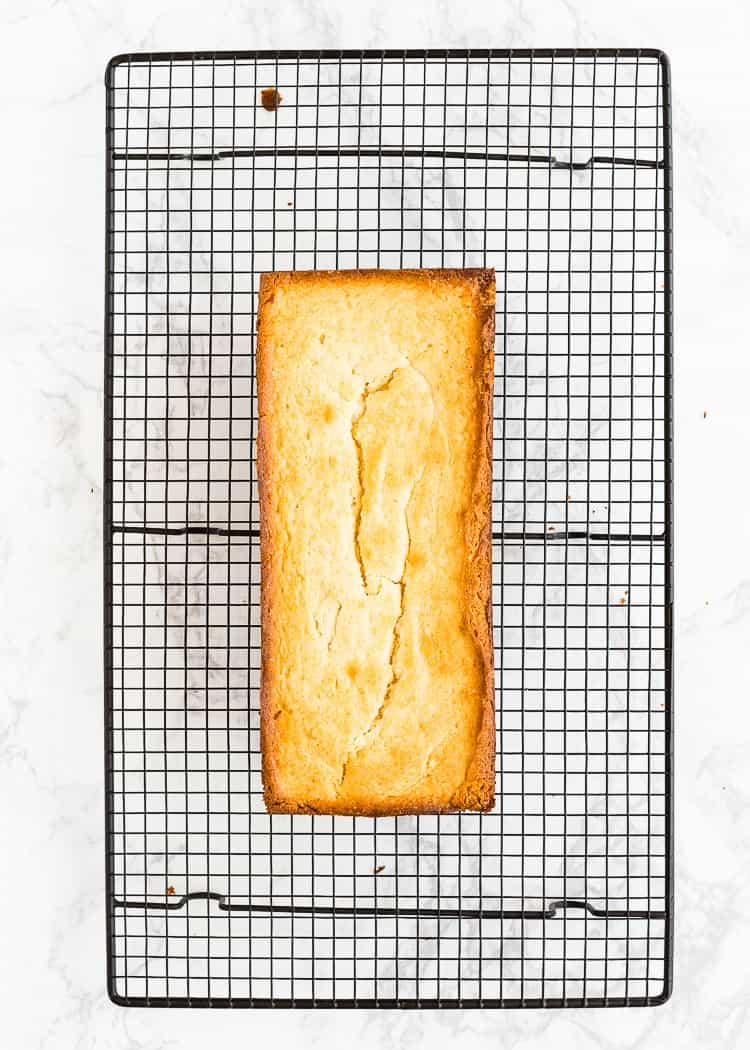
7 – Bake.
Lemon Sugar Glaze
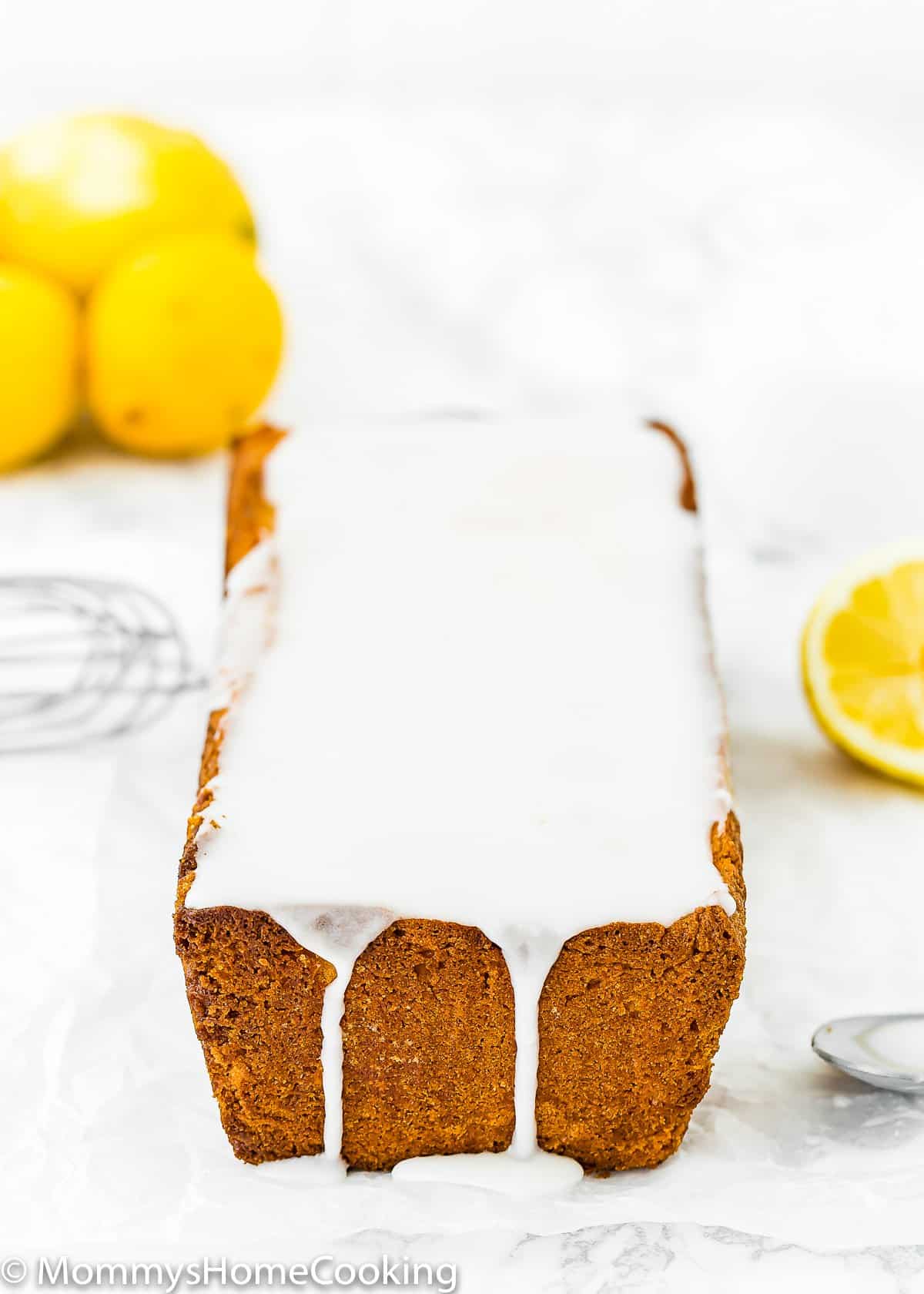
The sugar lemon glaze on top of the pound cake adds a whole other level of flavor. It’s sweet and zingy and totally delicious. To make it you just need confectioners’ sugar, lemon juice, and heavy cream (or half and half or milk).
Eggless Cake Success Tips
Measure the ingredients correctly. I highly recommend using a kitchen scale.
Preheat the oven for at least 15 minutes before getting started to give it plenty of time to reach the ideal recipe temperature.
Don’t overmix the batter. Instead, mix just until you’ve evenly distributed the ingredients throughout the batter.
Bake the batter as soon as it is ready.
Don’t open the oven door until your baked good has set. Leave the oven closed until the minimum time is stated in the recipe.
Every oven is different, so baking times always have to be taken with a grain of salt. Oven thermostats can be wildly off, affecting baking time, so keep an eye on yours.
Adapt This Recipe to Other Food Allergies
This recipe is egg- and nut-free, but you can adapt it to other food allergies.
Gluten-Free
Substitute all-purpose flour for 1-to-1 Gluten-Free flour mix. My favorite brand is Better Batter Original All Purpose Flour Blend. Cup4Cup will also work fine, but the texture will be slightly different.
Dairy-Free
Use your favorite plant-based, dairy-free, or vegan butter and milk. Make sure to use an unflavored, unsweetened variety of non-dairy milk. Soy and oat milk have the best consistency and very neutral flavors. My favorite dairy-free butter brands for baking are:

Frequently Asked Questions
The pound cake can be too dry if you added too much flour or overbaked it.
You can buy you’ll lose a lot of flavor!
Yes, I would suggest adding about 1 cup.
Pound cakes are dense and take a while to bake in the oven. Baking times vary, so keep an eye on yours, and don’t be alarmed if yours is taking longer. The pound cake is ready when a toothpick inserted in the center comes out *mostly* clean. A couple of moist crumbs are OK.
Storing & Freezing Instructions
Store: Cover leftover pound cake tightly and store at room temperature for up to 3 days or in the refrigerator for up to 5 days.
Freeze: Yes, you can this delicious egg-free pound cake! Just follow these simple steps:
- Let the eggless lemon cake cool completely.
- Wrap it up in 2 layers of plastic wrap, then with foil to avoid freezer burn.
- Place inside a large freezer Ziploc bag and freeze for up to 2 months.
Ready to eat it? Thaw it overnight on the countertop before slicing and serving.
More Eggless Lemon Recipes You’ll Love!
- Eggless Lemon Cake
- Easy Eggless Lemon Curd
- Eggless Lemon Blueberry Cheesecake Bars
- Easy Eggless Lemon Bars
- Easy Eggless Lemon Tart
- Easy Eggless Key Lime Pie
❤️ Love what you see? JOIN my Private Baking Club. Also, SUBSCRIBE to Mommy’s Home Cooking, so you’ll never miss a recipe! And FOLLOW along on Instagram, Pinterest, and Facebook for more fun!

Best Eggless Lemon Pound Cake

Equipment
Ingredients
- 2 cup (280 g) all-purpose flour
- 2 teaspoons baking powder
- ¼ teaspoon baking soda
- ¼ teaspoon salt
- ¼ cup (60 ml) fresh lemon juice
- ¾ cup (180 ml) milk (I used whole milk)
- 1 teaspoon pure vanilla extract
- ½ cup (115 g) unsalted butter, softened
- 1 cup (200 g) white sugar
- 1 tablespoon lemon zest
Lemon Sugar Glaze
- 1 cup (120 g) confectioners’ sugar, sifted
- 1 tablespoon (15 ml) fresh lemon juice
- 1 tablespoon (15 ml) heavy cream or milk
Instructions
- Adjust the oven rack to the middle position and preheat the oven to 350ºF (180ºC). Grease and flour a 9×5 inch loaf pan. You can also line the pan with parchment paper, then grease the parchment paper with cooking spray.
- In a large bowl, sift flour, baking powder, baking soda, and salt. Set aside.
- In a measuring cup or bowl, mix together lemon juice, milk, and vanilla extract.
- Using an electric hand mixer or a stand mixer, beat butter until creamy on medium-high speed, about 3 – 4 minutes. Add the sugar and beat on high speed for 4 minutes until creamed and pale, scraping down the sides and up the bottom of the bowl with a rubber spatula as needed. Add lemon zest and beat for 1 minute.
- Turn the mixer to low and add the flour mixture in three batches, alternating with the milk-lemon mixture, beginning and ending with the flour mixture; beat until just combined, about 30 – 45 seconds. Do not overmix.
- Pour the batter into the prepared pan. NOTE: The lemon cake batter is thick, so use a spatula to spread it into the pan, if necessary.
- Bake for 40 – 45 minutes, or until a toothpick comes out clean when poked in the center. Allow the pound cake to cool for 10 minutes in the pan. Then, remove the cake from the pan and let it cool completely on a wire rack. The cake must be completely cool before frosting.
Make the glaze:
- Whisk all of the icing ingredients together and pour over the pound cake.
- Measure the ingredients correctly. I highly recommend using a kitchen scale.
- Make sure to cream the butter and sugar together for 4 – 5 minutes, until creamy and pale. To achieve this, the butter has to be at the right consistency; ideally, the butter will easily bend without breaking and will give slightly when pressed. If it looks or feels oily is too soft.
- Don’t overmix the batter. Mix just until you’ve evenly distributed the ingredients throughout the batter.
- Bake the cake(s) as soon as the batter is ready.
- Don’t open the oven door until the cake(s) has set. Leave the oven closed until the minimum time stated in the recipe.
- Preheat the oven at least 15 minutes before you get started to give it plenty of time to reach the ideal recipe temperature.
- Every oven is different so baking times always have to be taken with a grain of salt. Oven thermostats can be wildly off and that will all affect baking time so keep an eye on yours. The cake(s) are done when a toothpick inserted in the center comes out clean.
Nutrition
Eggless Baking Frequently Asked Questions
You’ve asked, and I’ve answered! Read on for a handful of answers to the most frequently asked questions about eggless baking.
Originally posted in July 2020, the post content was edited to add more helpful information, no change to the recipe in April 2022.

