

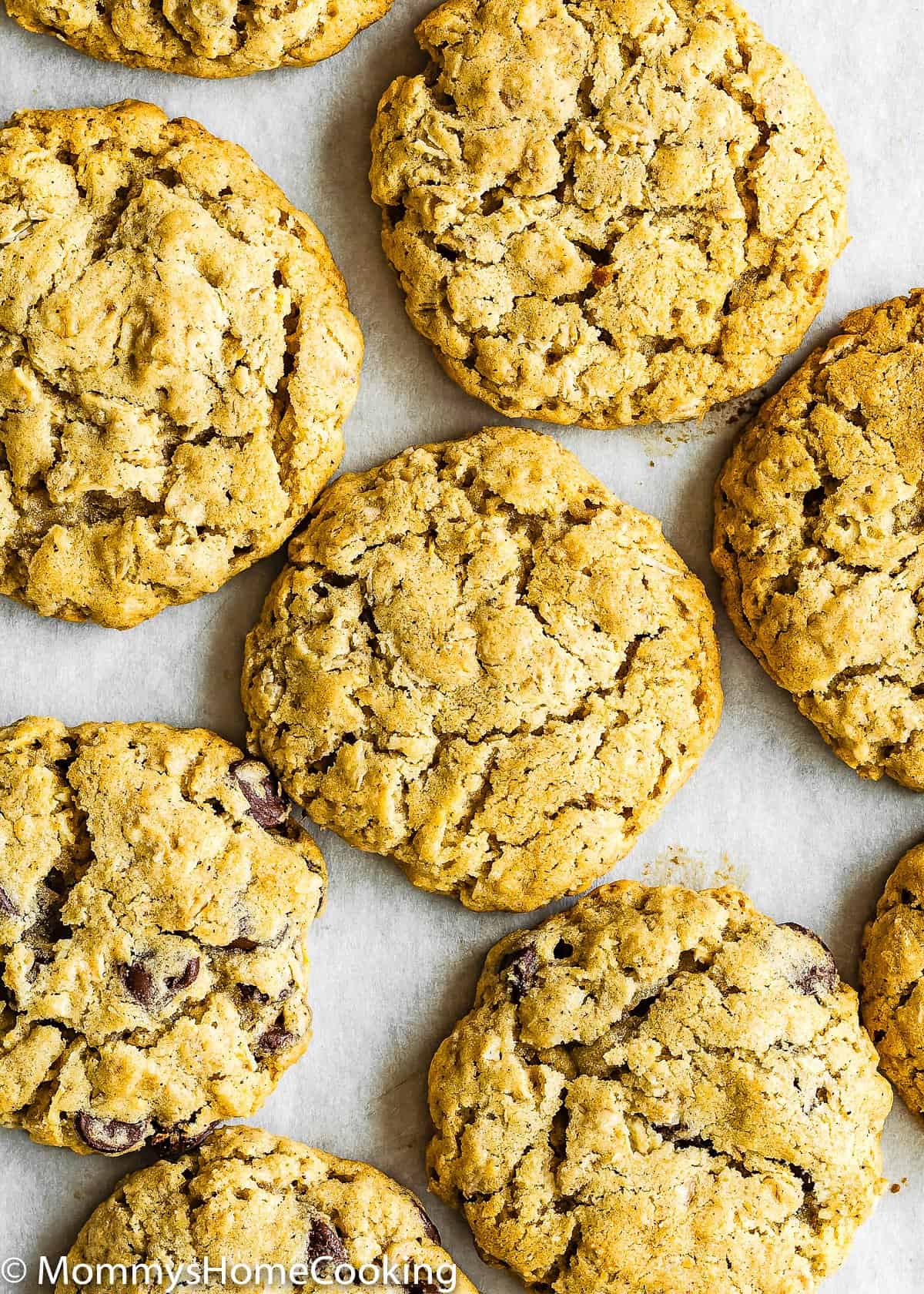
Looking for an insanely good oatmeal cookie recipe without eggs? You found it! As an allergy mom with 12+ years of egg-free baking experience, I know the struggle of wanting treats that feel special but are still safe for everyone at the table, and these cookies deliver exactly that. These Eggless Oatmeal Cookies are soft, chewy in the middle, and slightly crispy on the outside. Made with simple, everyday ingredients and tested until foolproof, they freeze beautifully and make the perfect make-ahead snack. Trust me, this is one of those recipes you’ll come back to again and again because it just works.

Oriana’s Thoughts On The Recipe

When my daughter was first diagnosed with an egg allergy, oatmeal cookies were one of the recipes I missed the most. They were my go-to comfort cookie, and I wasn’t willing to let food allergies take that away. So I started testing—and testing again—until I found a way to recreate the same cozy, cinnamon-spiced cookies I grew up loving, without a single egg in sight.
Now, every time I pull a tray of these cookies out of the oven, it feels like a little victory. They’re everything an oatmeal cookie should be—crispy outside, soft inside, and perfectly chewy—with the bonus of being totally safe and inclusive. And the best part? No one will ever guess they’re egg-free.
What I Love About This Recipe


Ingredients Notes & Substitutions

Please check the recipe card at the bottom of the post for exact quantities and instructions (scroll down).
You’ll need:
- Flour: Standard all-purpose flour works best here; skip the cake flour, bread flour, and wheat flour.
- Old-Fashioned Rolled Oats: These are the stars of the show, giving the cookies their chewy texture and heartiness.
- Baking powder + Baking Soda: Make sure they’re not expired.
- Ground cinnamon: For flavor.
- Salt: I prefer kosher or sea salt. If you only have table salt handy, I recommend reducing the amount to half.
- Butter: I prefer to use unsalted butter, but if you only have salted butter handy, you can use it. In this case, skip the salt called for in the recipe.
- Cream Cheese: It helps bind the dough and keeps the cookies soft and rich.
- Sugars: You will need granulated and brown sugar for this recipe.
- Milk: I like to use whole milk for baking, but you can use any milk you have handy.
- Molasses: This ingredient is optional but highly recommended. It adds depth to the flavor and a lovely golden color to the cookies.
- Pure vanilla extract: Reach for pure vanilla instead of imitation for optimal flavor. Even better, try homemade vanilla extract!
Food Allergy Swaps
- Dairy-Free: To make this recipe dairy-free, you can easily swap out the dairy ingredients for non-dairy alternatives. Use vegan butter instead of dairy butter. Many brands are available in stores. I usually use Earth Balance Vegan Buttery Sticks or Miyoko’s Creamery Organic Vegan Butter. To substitute the cream cheese, I like to use Violife Just Like Cream Cheese Original.
- Gluten-Free: Use a gluten-free, all-purpose flour blend. Look for a gluten-free flour blend specifically formulated for baking, as it will have the right combination of flours and starches to mimic the texture of wheat flour. My favorite is Better Batter Original Blend. I also like Doves Farm Freee Gluten-Free All-Purpose Flour, but this blend does not contain xanthan gum, so you need to add 1/4 teaspoon of xanthan gum per cup (140 g) of gluten free flour blend.
Process Overview: Step-by-Step Photos
Please check the recipe card at the bottom of the post for exact quantities and instructions (scroll down).
Step 1 – Mix Dry Ingredients
Mix flour, baking powder, baking soda, cinnamon, and salt in a bowl.

Step 2 – Cream Butter and Sugars
Cream together butter, cream cheese, and sugars. Then add the milk, molasses (if using), and vanilla; mix until combined.


Step 3 – Add Dry Ingredients Mixture
Add the dry ingredients and oats; mix until incorporated. Note: And any extra mix-ins (if desired).

Step 4 – Scoop Up The Dough
Use a small cookie scoop (1.5 to 2 tablespoons) to measure out the oatmeal cookie dough. Roll each portion into a smooth ball and place it on a cookie sheet or large plate. If time allows, refrigerate for 30 minutes for up to 2 days.

Step 5 – Bake
Bake for 10-12 minutes, until barely golden brown around the edges but still soft in the middle. When you remove the cookies from the oven, they will still look doughy, and that is okay; they will continue to set as they cool.

Optional Mix-Ins Ideas
I love a plain oatmeal cookie, but if you want to jazz up your oatmeal cookies, you can add up to 1 cup of the following ingredients:
- Chocolate chips (dark or white)
- Chocolate chunks (dark or white)
- Chopped nuts
- Dried fruits, such as raisins or dried cranberries
- M&M’s
- Flaked coconut
- Chopped toffee
- Cinnamon chips
- Butterscotch chips

Storing & Freezing Instructions
Storage: Cookies can be stored in an airtight container at room temperature for up to 5 days. To keep them soft, place a piece of bread in the container. The bread will get hard, but the cookies will stay soft.
Freeze: You can freeze this cookie dough for up to 3 months. Just roll it into balls and freeze. When ready to bake, pull them out and bake as directed; add a couple of minutes to the baking time.
Frequently Asked Questions
Yes, you can, but just be aware that it will change the texture of the cookies. For the perfect, chewy texture, use old-fashioned rolled oats.
Yes, I highly recommend chilling the dough since it prevents cookies from spreading out too quickly once they’re in the oven.
Store the cookies in a well-sealed airtight container at room temperature. Also, add a slice of bread to the container as well.

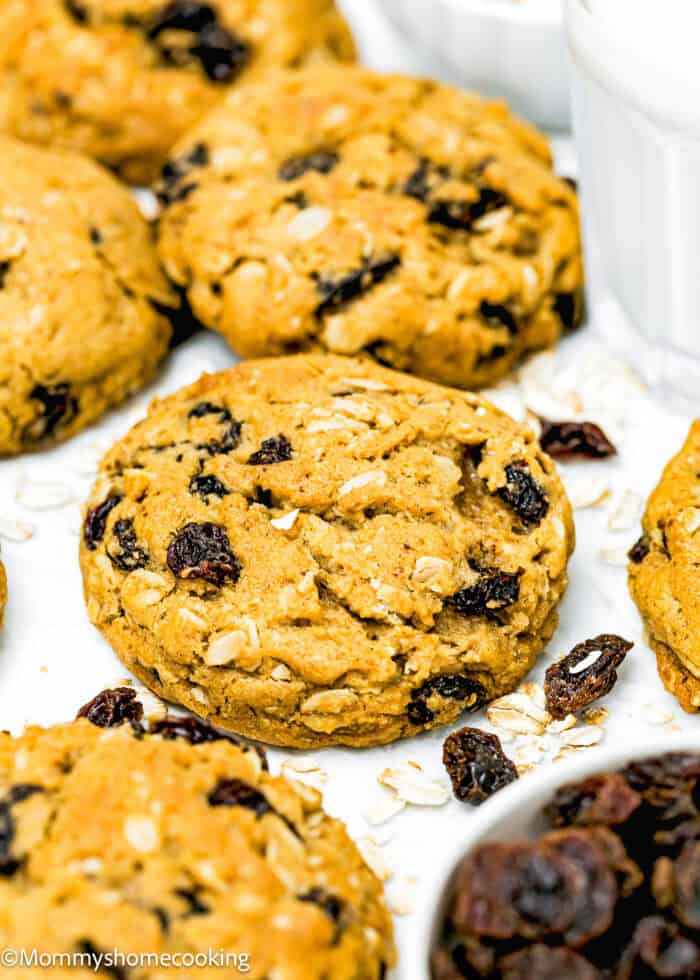
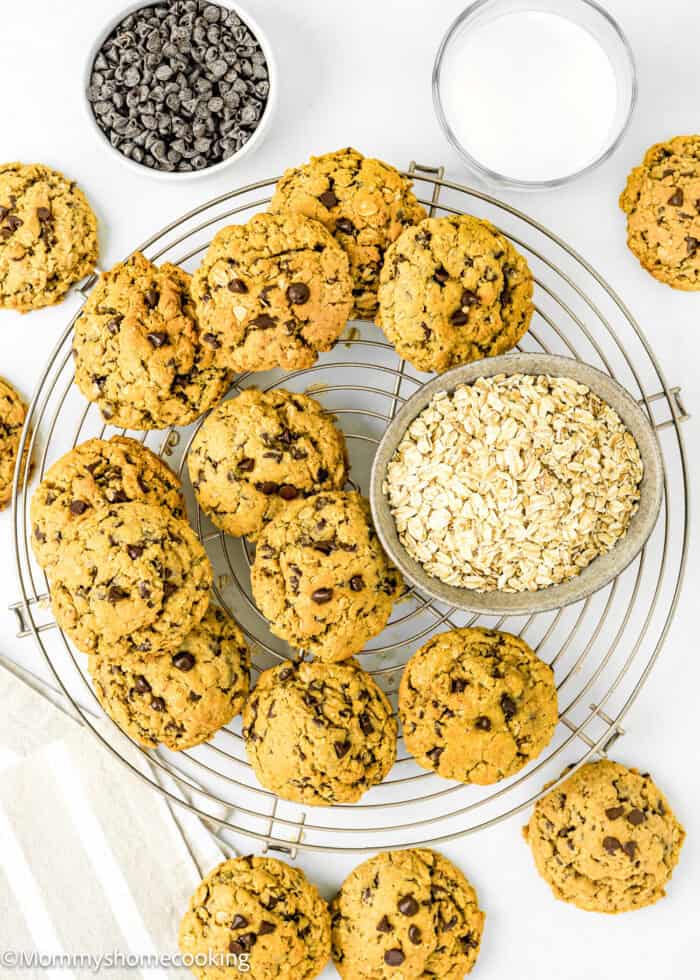
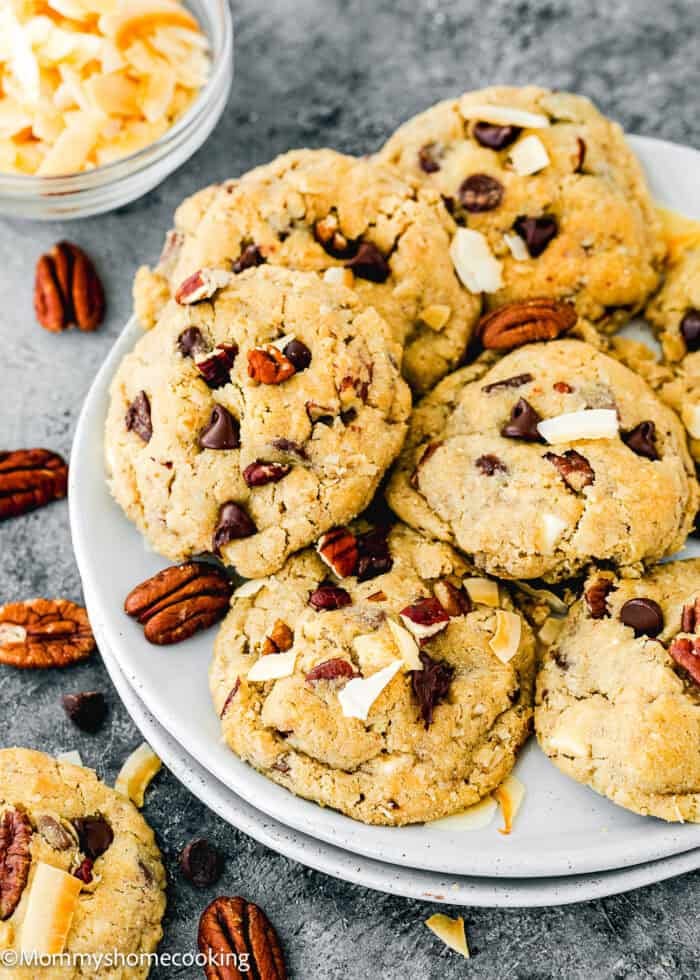
Try These Egg-Free Oatmeal Cookie Recipes Next!

Recipe Card

Eggless Oatmeal Cookies


Video
Equipment
Important
• For best results, I highly recommend using a kitchen scale to measure the ingredients.
Ingredients
- 1 ½ cups (210 g) all-purpose flour
- 1 teaspoon (4 g) baking powder
- 1 teaspoon (6 g) baking soda
- 1 teaspoon ground cinnamon
- ½ teaspoon (2 g) salt
- ½ cup (115 g) unsalted butter, softened
- 2 tablespoons (30 g) cream cheese
- ½ cup (100 g) granulated sugar
- ½ cup (100 g) brown sugar
- ¼ cup (60 ml) milk
- 1 tablespoon (15 ml) unsulphured or dark molasses (optional – see notes)
- 2 teaspoons (10 ml) pure vanilla extract
- 1 ½ cups (150 g) old-fashioned rolled oats
Instructions
- Combine flour, baking powder, baking soda, cinnamon, and salt in a bowl. Set aside.
- Beat butter, cream cheese, granulated sugar, and brown sugar in a large mixer bowl over medium speed until smooth and creamy, about 3 – 4 minutes. Scrape down the sides and bottom of the bowl as needed.
- Add milk, molasses (if using), and vanilla; mix until incorporated. Reduce speed to low and gradually beat in flour mixture until combined. Stir in oats until evenly distributed.
- Use a small cookie scoop (1.5 to 2 tablespoons) to scoop out the oatmeal cookie dough. Roll each portion into a smooth ball and place it on a cookie sheet or large plate. If time allows, refrigerate for 30 minutes for up to 2 days.
- Preheat oven to 350º F (180º C). Line a large baking sheet with parchment paper or a silicone baking mat.
- Place the cooled cookie balls evenly spaced, about 2 inches apart, on your prepared cookie sheet.
- Bake for 10-12 minutes, until barely golden brown around the edges, but still soft in the middle. When you remove the cookies from the oven, they will still look doughy, and that is okay; they will continue to set as they cool.
- Cool on baking sheets for 2 minutes; remove to wire racks to cool completely.
-
- Dairy-Free: To make this recipe dairy-free, you can easily swap out the dairy ingredients for non-dairy alternatives. Use vegan butter instead of dairy butter. Many brands are available in stores. I usually use Earth Balance Vegan Buttery Sticks or Miyoko’s Creamery Organic Vegan Butter. To substitute the cream cheese, I like to use Violife Just Like Cream Cheese Original.
-
- Gluten-Free: Use a gluten-free, all-purpose flour blend. Look for a gluten-free flour blend specifically formulated for baking, as it will have the right combination of flours and starches to mimic the texture of wheat flour. My favorite is Better Batter Original Blend. I also like Doves Farm Freee Gluten-Free All-Purpose Flour, but this blend does not contain xanthan gum, so you need to add 1/4 teaspoon of xanthan gum per cup (140 g) of gluten-free flour blend.
- Chocolate chips (dark or white)
- Chocolate chunks (dark or white)
- Chopped nuts, dried fruits, such as raisins or dried cranberries
- M&M’s
- Flaked coconut
- Chopped toffee
- Cinnamon chips
- Butterscotch chips
- Make sure the butter is softened but not too soft.
- Measure the ingredients properly! A kitchen scale is always the best option, in my opinion, but if you don’t have a kitchen scale, be sure to use a measuring cup made for dry ingredients (NOT a liquid measuring cup) and a liquid measuring cup for liquid ingredients. Also, do NOT dip a measuring cup directly into the flour bin or you can compact it and get up to 25% more flour, instead use a spoon to scoop the flour into the measuring cup, and then I use a knife (straight-edged) to level the flour across the measuring cup.
- Don’t over-mix your cookie dough, or you will end up with a dense cookie.
- If time allows, chill the dough for 30 minutes before baking; this gives it a chance to firm up a little and allows it to bake much better.
- For evenly sized cookies (better for baking), use a small spring-loaded ice cream scoop to spoon out the dough.
- Bake the cookies until they are just golden around the outside. They might still look a little raw in the center, but once they cool, they will be perfect. Let the cookies cool on the baking sheets for just a few minutes, around 2. If you leave the cookies on the baking sheets for too long, they will continue cooking and become hard.
Nutrition
Nutrition information provided is an estimate and will vary based on cooking methods and brands of ingredients used.
Eggless Baking Frequently Asked Questions
You’ve asked, and I’ve answered! Read on for a handful of answers to the most frequently asked questions about eggless baking.
Originally posted in April 2020, the post content was edited to add more helpful information in November 2024.









Just a tip. But if you use salted butter and cream cheese either cut the salt out completely or maybe due 1/4 or lower tsp of salt. The 1/2 tsp with the salted butter and cream cheese made my cookies extremely salty.
Hi Angela! Thank you so much for taking the time to share this — and I’m sorry your cookies came out saltier than you’d hoped. You’re absolutely right that salted butter plus cream cheese can push the salt over the top, and that’s actually why the recipe is written for unsalted butter, so the ½ teaspoon stays balanced. But your tip is a really helpful one for anyone who only has salted butter on hand: cut the added salt down to ¼ teaspoon or skip it entirely, and you’ll be right back in that perfect sweet-salty zone. I hope you’ll give them another go that way — I think you’ll love how they turn out!