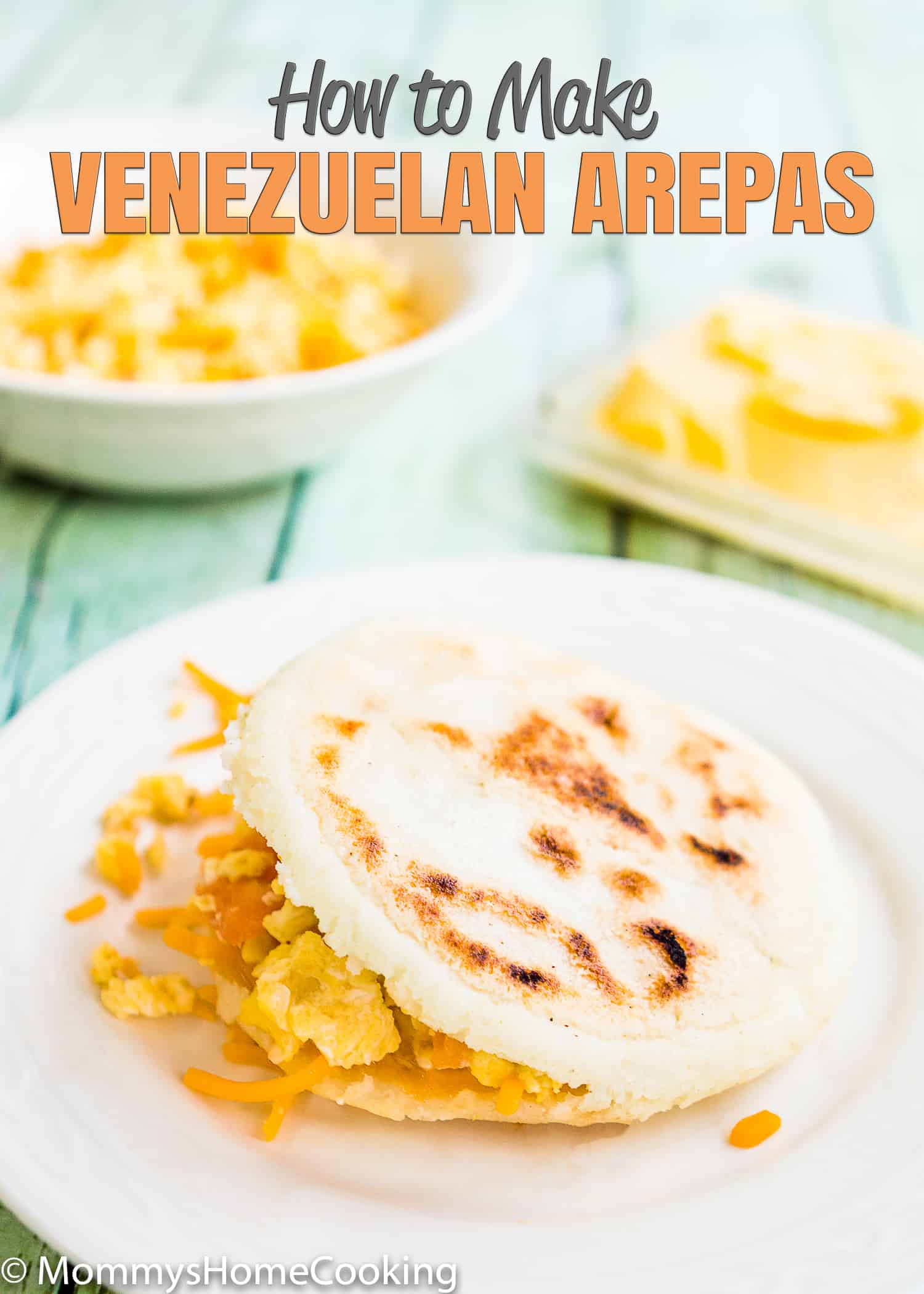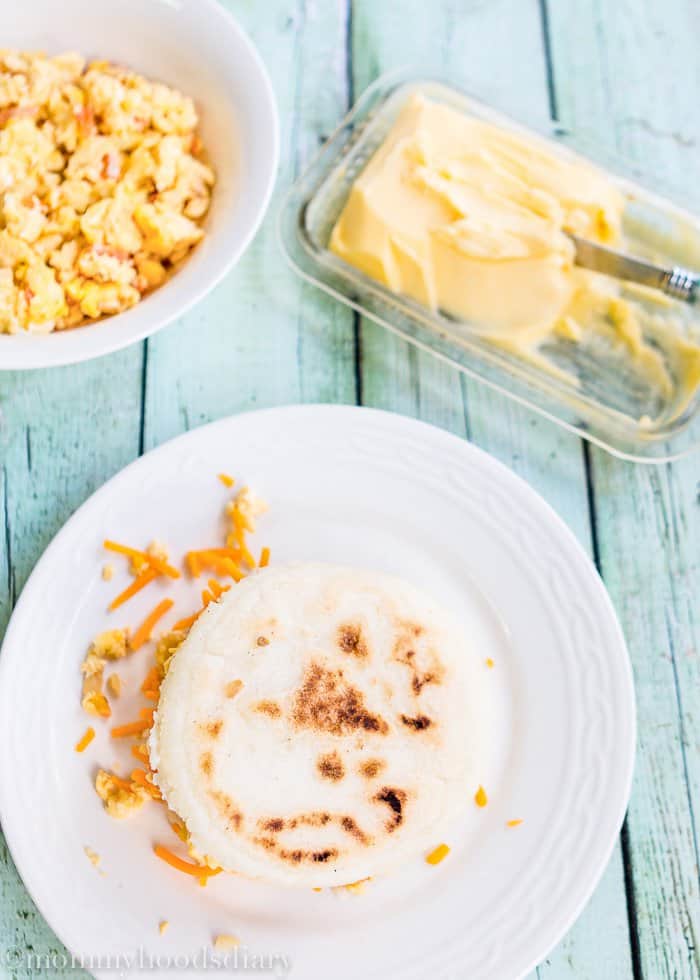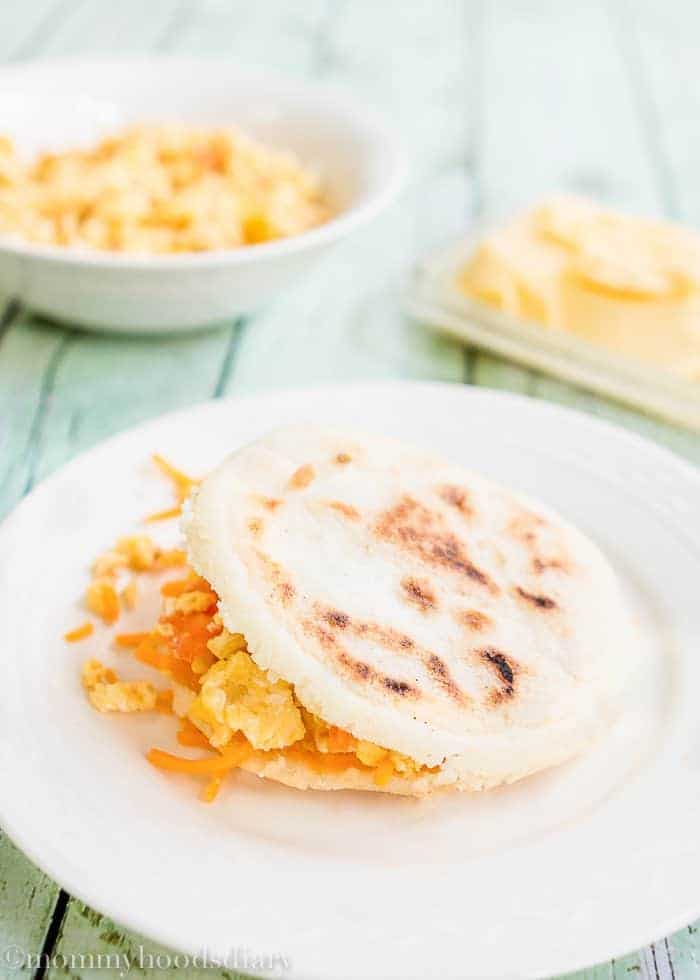


How to Make Venezuelan Arepas (Arepas Venezolanas)

This post may contain affiliate links. Read our disclosure policy.

If you’ve been searching for an authentic Venezuelan arepas recipe — one that actually tastes like the real thing — you’ve found it. Arepas venezolanas are made with just three ingredients: Harina P.A.N. white corn flour, water, and salt. I grew up making them in Venezuela, and this is exactly how my family has always made them. They’re naturally gluten-free, egg-free, and endlessly versatile — fill them with cheese for breakfast, shredded beef or chicken for dinner, or anything in between. Once you learn how to make Venezuelan arepas, they’ll become a staple at your table too.

Three grilled arepas are filled with shredded chicken and avocado, resting on a wooden serving board—just like in classic How to Make Venezuelan Arepas (Arepas Venezolanas) recipes.

Oriana’s Thoughts On The Recipe

Oriana Romero, creator of Mommy's Home Cooking and egg-free baking queen.

Arepas are the ultimate comfort food for me. Back home in Venezuela, arepas are on the table almost every single day — they’re the equivalent of biscuits in the South, tortillas in Mexico, or baguettes in France. I remember waking up to the smell of arepas on the budare every morning, and that smell still takes me straight back to my grandmother’s kitchen.

I’ll be honest with you: my son Matthew loves them. He’s been eating arepas since he was tiny, and every time I make them, I feel like I’m passing a little piece of Venezuela down to him. My daughter Vicky is still coming around — but I’m not giving up. A daughter of mine will eat arepas, LOL.

Here’s why you’re going to love this recipe:

  • Crispy on the outside, soft and steamy on the inside — the texture is perfect every time
  • Just 3 ingredients — you probably already have them
  • Ready in under 30 minutes, start to finish
  • Naturally gluten-free and egg-free
  • Endlessly versatile — fill them differently for breakfast, lunch, and dinner
  • Perfect for leftovers — shred any protein you have in the fridge, and you’re done
  • Freezer-friendly — make a big batch and reheat all week

I’ve made this recipe a thousand times, and it never fails. If you’re new to arepas, don’t be intimidated — once you feel the dough right, you’ll know exactly what you’re doing. Make them once, and you’ll be hooked.

Handwritten text reading "xo, Oriana" on a light pink background, reminiscent of the soft hues in strawberry puree.

What are Venezuelan Arepas?

An arepa is a round, flat patty made from pre-cooked white corn flour (Harina P.A.N.), water, and salt. It can be grilled, baked, or fried — and it’s filled, not topped. That’s one of the key things that makes Venezuelan arepas different from their Colombian cousins: Venezuelan arepas are thick, slightly puffy, and always sliced open and stuffed with a filling. Colombian arepas tend to be thinner, lower in fat, and are typically topped rather than filled.

Arepas have pre-Columbian origins — indigenous peoples across what is now Venezuela, Colombia, and Panama were grinding corn and cooking flat patties long before Spanish colonization. In Venezuela, the arepa is more than a food — it’s a daily ritual, a cultural symbol, and a comfort that every Venezuelan carries with them no matter where they go in the world.

Ingredients — What You Need And Why

Harina P.A.N. White Corn Flour: This is the non-negotiable ingredient. Harina P.A.N. is a pre-cooked, finely ground white corn flour — and it is NOT the same as regular cornmeal, masa harina, or polenta. Those will not work for arepas. Look for the yellow bag with “Harina P.A.N.” on the label, specifically the white corn variety. You’ll find it in the Latin foods aisle of most large grocery stores, at any Latin market, or online. GOYA’s Masarepa is an acceptable alternative if you can’t find P.A.N.

Water: It helps the flour hydrate evenly and makes the dough easier to knead.

Salt: Just a pinch. Arepas have a mild, slightly sweet corn flavor — you don’t want to over-salt them.

Oil (optional): Some Venezuelan families add a small drizzle of oil to the dough for extra richness and a slightly crispier exterior. I always add oil.

Two arepas filled with shredded cheese and meat are served on a black plate, with a small bowl of guacamole in the background—an inviting example of How to Make Venezuelan Arepas (Arepas Venezolanas).

Can I use a different flour?

No — Harina P.A.N. (or another pre-cooked corn flour like GOYA Masarepa) is the only flour that works for authentic arepas. Regular cornmeal, masa harina, or polenta will give you a completely different texture, and the arepas won’t hold together.

Can I make them without salt?

You can reduce it, but a pinch of salt really does make a difference in flavor. I wouldn’t skip it entirely.

Can I add cheese to the dough?

Absolutely — this is actually a popular variation. Add a handful of crumbled queso blanco or shredded white cheese directly into the dough before shaping. Delicious.

A plate of grilled arepas surrounds a bowl of creamy white dip, set on a wooden surface with a wooden spoon and some cilantro—perfect for showcasing How to Make Venezuelan Arepas (Arepas Venezolanas).

Oriana’s Tips

  • Use lukewarm water — not cold. Cold water makes the dough stiff and harder to work with. Lukewarm water hydrates the flour more evenly and gives you a softer, more pliable dough.
  • The dough should feel like soft Play-Doh. That’s the best way I can describe the right consistency. It should be smooth, not sticky, and not crack when you press it into a disk. If it’s sticking to your hands, add a tiny bit more flour. If it’s cracking at the edges, add a few drops of water.
  • Let the dough rest for 5 -10 minutes. After mixing, let the dough sit for 5-10 minutes before shaping. This gives the flour time to fully absorb the water and makes the dough much easier to handle.
  • Don’t make them too thin. Venezuelan arepas should be about ¾ to 1 inch thick — thick enough to open and fill. If they’re too thin, they won’t puff up, and you won’t be able to stuff them.
  • Use the tap test to know when they’re done. When an arepa is fully cooked, it will sound hollow when you tap it on top — like tapping an empty box. That’s your cue. Don’t go by color alone.
  • Finish them in the oven for the best texture. After cooking on the griddle, I transfer my arepas to a 350°F oven for 10 minutes. This makes them beautifully crispy on the outside while keeping the inside soft and steamy. This is how most Venezuelan households do it.

Traditional Arepa Fillings — What To Put Inside

One of the best things about arepas is that you can fill them with almost anything. Here are the most traditional Venezuelan fillings:

  • Reina Pepiada — Shredded chicken mixed with avocado and mayo. This is the queen of all arepa fillings and probably the most famous Venezuelan arepa in the world.
  • Carne Mechada — Venezuelan shredded beef, seasoned with sofrito, tomatoes, and onion. Rich, savory, and absolutely perfect inside an arepa.
  • Perico — Scrambled eggs with tomatoes and onions. This is the classic Venezuelan breakfast arepa — the one I grew up eating every morning.
  • Dominó — Black beans and white cheese. Simple, satisfying, and a staple in Venezuelan homes.
  • Butter + Ham + Cheese — The simplest and most comforting option. Don’t underestimate it.
  • Pollo GuisadoShredded chicken stewed with tomatoes and onion. A lighter alternative to carne mechada.
  • Tuna with Mayo — Quick, easy, and always delicious. A great option for using what you have.
  • Leftovers — This is the genius of arepas. Have some leftover pulled pork or black beans? Fill an arepa with it. Done.

How To Store, Freeze & Reheat Arepas

  • Room Temperature: Store cooked arepas in an airtight container for up to 2 days.
  • Refrigerator: Store in an airtight container for up to 5 days.
  • Freezer: Wrap each arepa individually in plastic wrap, then place in a zip-lock freezer bag. Freeze for up to 3 months. This is my favorite option — I always make a double batch and freeze half for busy weeknights.
  • To Reheat: You have three great options:
    • Air Fryer, Toaster, or toaster oven: My favorite — gives you that crispy exterior back in minutes.
    • Oven: 350°F for 10–12 minutes, directly on the rack.
    • Dry skillet: Medium heat, 3–4 minutes per side. No oil needed.

Do not microwave arepas if you can avoid it — they turn soft and lose that wonderful crispy crust.

Frequently Asked Questions

You need Harina P.A.N. white corn flour — a pre-cooked, finely ground corn flour that is not the same as regular cornmeal, masa harina, or polenta. Look for the yellow bag labeled “Harina P.A.N.” in the Latin foods aisle or at any Latin grocery store. GOYA Masarepa is a good alternative.

Venezuelan arepas are thicker, slightly fattier, and always sliced open and stuffed with a filling. Colombian arepas are thinner, lower in fat, and are typically topped rather than filled. Both are delicious — but the thick, stuffed Venezuelan arepa is what you’ll find in this recipe.

Cracking dough usually means it needs a little more water. Add water one teaspoon at a time, knead, and test again. The dough should be smooth and pliable — it should press into a disk without any cracks at the edges.

Yes — the basic arepa recipe (Harina P.A.N., water, salt) is naturally gluten-free. Always check your specific brand of pre-cooked corn flour to confirm it’s processed in a gluten-free facility if you have a serious gluten sensitivity.

Use the tap test. Tap the top of the arepa lightly with your finger or a spoon — if it sounds hollow, like tapping an empty box, it’s done. The outside should also be a light golden color with a slightly crispy crust.

A hand dips a grilled arepa into a bowl of white cream, showcasing the delicious result of learning How to Make Venezuelan Arepas (Arepas Venezolanas).

❤️ Love what you see? Subscribe to Mommy’s Home Cooking email list, so you’ll never miss a recipe! Follow along on Instagram, Pinterest, and Facebook for more fun! 

Three grilled arepas are filled with shredded chicken and avocado, resting on a wooden serving board—just like in classic How to Make Venezuelan Arepas (Arepas Venezolanas) recipes.

Authentic Venezuelan Arepas Recipe

Oriana Romero
These authentic Venezuelan arepas are crispy on the outside, soft and pillowy on the inside, and made with just three pantry ingredients. Fill them with shredded beef, scrambled eggs, chicken, or anything you love —they're a staple at our Venezuelan table every single week.
4.15 from 42 votes
Prep Time 15 minutes
Cook Time 14 minutes
Total Time 29 minutes
Servings 4 servings

Important

• For best results, I highly recommend using a kitchen scale to measure the ingredients.

Ingredients
 

salt

  • 2 cups (480g) warm water
  • 1 teaspoon (6g) salt
  • cups (180g) Harina P.A.N. (pre-cooked white corn flour)
  • 1 teaspoon (4g) corn, canola, or vegetable oil (optional but recommended)

Instructions
 

  • Wash your hands.
  • In a medium bowl, add the warm water and salt. Mix until the salt is dissolved.
  • Slowly add the Harina P.A.N., mixing with your hands and breaking up any lumps that form. Let the dough rest for 5 minutes to thicken.
  • Preheat a non-stick griddle or skillet over medium heat.
  • Add the oil to the dough and knead for 2 minutes. The dough should feel smooth and firm — like soft Play-Doh. If it’s too soft, add a little more Harina P.A.N. If it’s too stiff, add a few drops of water.
  • Divide the dough into 4 equal portions. Roll each into a ball, then flatten gently into a disc about ½ inch thick.
  • Place the discs on the preheated griddle and cook for 5–7 minutes per side, until lightly golden brown. The arepa is done when it sounds hollow when tapped on top.
  • Serve hot. Split each arepa open, add a little bit of butter, and fill with whatever you love — cheese, ham, eggs, beans, chicken, beef, tuna. The possibilities are endless.
Oriana’s Notes
 
Store: Room Temperature: Store cooked arepas in an airtight container for up to 2 days. Refrigerator: Store in an airtight container for up to 5 days.
 
Freezer: Wrap each arepa individually in plastic wrap, then place in a zip-lock freezer bag. Freeze for up to 3 months. This is my favorite option — I always make a double batch and freeze half for busy weeknights.
To Reheat: You have three great options:
  • Air Fryer, Toaster, or toaster oven: My favorite — gives you that crispy exterior back in minutes.
  • Oven: 350°F for 10–12 minutes, directly on the rack.
  • Dry skillet: Medium heat, 3–4 minutes per side. No oil needed.
Do not microwave arepas if you can avoid it — they turn soft and lose that wonderful crispy crust.
 
Oriana’s Tips:
  • Use lukewarm water — not cold. Cold water makes the dough stiff and harder to work with. Lukewarm water hydrates the flour more evenly and gives you a softer, more pliable dough.
  • The dough should feel like soft Play-Doh. That’s the best way I can describe the right consistency. It should be smooth, not sticky, and not crack when you press it into a disk. If it’s sticking to your hands, add a tiny bit more flour. If it’s cracking at the edges, add a few drops of water.
  • Let the dough rest for 5 -10 minutes. After mixing, let the dough sit for 5-10 minutes before shaping. This gives the flour time to fully absorb the water and makes the dough much easier to handle.
  • Don’t make them too thin. Venezuelan arepas should be about ¾ to 1 inch thick — thick enough to open and fill. If they’re too thin, they won’t puff up, and you won’t be able to stuff them.
  • Use the tap test to know when they’re done. When an arepa is fully cooked, it will sound hollow when you tap it on top — like tapping an empty box. That’s your cue. Don’t go by color alone.
  • Finish them in the oven for the best texture. After cooking on the griddle, I transfer my arepas to a 350°F oven for 10 minutes. This makes them beautifully crispy on the outside while keeping the inside soft and steamy. This is how most Venezuelan households do it.
 
I appreciate your feedback, and it helps others, too! Recipe reviews on the website are extremely valuable to other readers online. So, please don’t forget to give it a 5-star rating below.

Nutrition

Calories: 168kcalCarbohydrates: 33gProtein: 4gFat: 3gSaturated Fat: 1gSodium: 589mgPotassium: 114mgFiber: 3gSugar: 1gCalcium: 63mgIron: 1mg

Nutrition information provided is an estimate and will vary based on cooking methods and brands of ingredients used.

Share your Creations!Tag @mommyshomecooking on Instagram and hashtag it #mommyshomecooking or Join my Private Facebook Group
Course Breakfast
Cuisine Venezuelan
Calories 168
Keyword arepa easy how to recipe venezuela

More Recipes To Explore!

4.15 from 42 votes (30 ratings without comment)

Leave a Reply

Your email address will not be published. Required fields are marked *

Recipe Rating


This site uses Akismet to reduce spam. Learn how your comment data is processed.

64 Comments

  1. I just made them for only the second time, and even after doing a follow-up baking, I ended up with a crispy outside but an inside that was like very thick mashed potatoes. I guess I was expected something more like bread inside. Not sure if I am missing something here.

    1. Hello Brian! Thanks for trying my recipe. The arepas have not bread texture. Having said that, they shouldn’t be like thick mashed potatoes either. I would suggest reducing the heat a big, so they don’t burn in the outside, but let them cook the inside a little more. Hope this help.

  2. I just contacted PAN flour manufacturer and they said that they use genetically modified corn to make this flour.
    If I use a different flour, one that is not precooked like PAN’s is the recipe or process different?

    1. Hello Denise! I am sorry I cannot be more helpful but all the flours I have used to make arepas are precooked. If you do try using an alternative flour, please let me know the outcome. Thanks for stopping by.?

  3. 5 stars
    I’m so happy to have found this recipe today!!!! I just found some P.A.N. cornflour here in Australia and was like, “I am totally gonna make arepas!” then I realized “I have NO IDEA how to make arepas!”. I grew up in NYC with my Ecuadorian parents and mom would make these every so often and I LOVED them but I haven’t had mom’s yummy arepas since she passed away nearly 9 years ago and I’m not sure if I can get them here in Melbourne, even if I could, part of me believes they are not gonna be as yummy as mom’s and I’ll be sadly and badly disappointed. At least this way I can play around with it at home til I perfect them or make them as close to Mom’s as possible 🙂 Thanx so much for posting this!!! So excited!

    1. Hello Margarita!! I am so glad you found my recipe. Arepas are really easy to make so I am sure you’ll do a great. I have never tried Ecuadorian arepas (adding them on my list). Thank YOU for your kind message and please let me know how your arepas turned out. ?

  4. Thank you for your Carne Mechada recipe.
    I would like to know which cheese you use for arepas. I can’t find, of course, Queso de Año nor Queso de Mano here in US – Westport Ct area.
    Making Pabellon for friends.
    Agains, thank you.
    Mari

    1. Hello Mari! I use queso aserrin, which I buy in Latin markets. It’s very similar to queso llanero. If you cannot find that type of cheese try queso cotija, in my opinion tastes like queso de año. If you are craving the salty taste if venezuelan cheese try arepas with feta (my personal favorite). You can also buy venezuelan cheese online ( https://www.thehallacafactory.com), but they are a little expensive. Hope it helps. Thanks so much for stopping by.

  5. 5 stars
    My neighbor made this for me with the shredded beef and chicken today. DELICIOUS!! She even gave me a bag of the PAN to be able to make it at home.

  6. I followed the package’s directions for 1 cup PAN mix + 1 cup water + 1/4 cup milk and rest for 6 minutes but the batter was too soft to be shaped, they were all over my fingers! With your proportions, was it easier to form into balls?

    1. Hi Kay! I think you bought the mix to make cachapas, not arepas, because the arepas mix doesn’t call for milk. The cachapa mix also says PAN in the package but this mix is sweet corn(maiz dulce). Look for the yellow package that says 100% white corn. Cachapas are delicious too! To make them just follow the package’s instructions then cook them as pancakes.

      1. Hi! It’s P.A.N. sweet corn mix (mezcla de maiz dulce) and at the bottom it says it’s for Arepas de Choclo, Cachapas, Chorreadas, etc etc! 🙂 I’ll probably use less liquid the next time and see if it works. Thanks.

          1. Oh I see! 😀 I don’t think we have that here and my packet was given to my by a Colombian friend. She doesn’t measure her proportions and told me to just follow the package directions, lol! Thank you for pointing out the difference!

  7. 4 stars
    Thank you for the recipe. A question tho – is the inside still supposed to be like soft dough? Is it supposed to firm up? The outside is crunchy but the inside seems still raw (warm tho?) when I was done . I have seen another recipe to bake them after griddle – is that necessary?
    And is there a good way to store them for later? I found in the fridge…it just wasn’t as good but just wondering if I didn’t know what I’m doing. Thanks!

    1. Hello Alana, the outside is suppose to be crunchy and the inside soft. I don’t bake them but you can try that for sure, many people does. Re-heated arepas are never as good as fresh but you can store them in the refrigerator up to 2-3 day, just make sure the open them up before.I hope this tips help.

  8. Wow! I hope you do not have to pay the Amazon price for Harina pan! We are fortunate because a little Mexican grocer (I know!) carries it and we stop in and buy a few bags at a time.

    I miss the cheese you buy from people on the sides of the road – they keep it in buckets. I think it’s queso de mano. Is it easily made? Do you know how? I would sure make some if I could!

    1. Hi Bobbi! I do have my personal recipe but I have not published yet. It’s in my to-do list! Stay tuned… I will publish it soon. Thanks for stopping by.

  9. 4 stars
    Me too! Las arepas son mi confort food. Son mi plato preferido y las como con todo.
    que chevere este post. Saludos!

  10. 5 stars
    Hice unas arepas en estos dias, y fueron un desastre total. Por eso me gusta leer lo que se publica en los blogs, porque siempre nos dan consejos y recetas que son de mucha ayuda. Gracias Ory ahora con esta receta si me quedaran buenas las arepas.