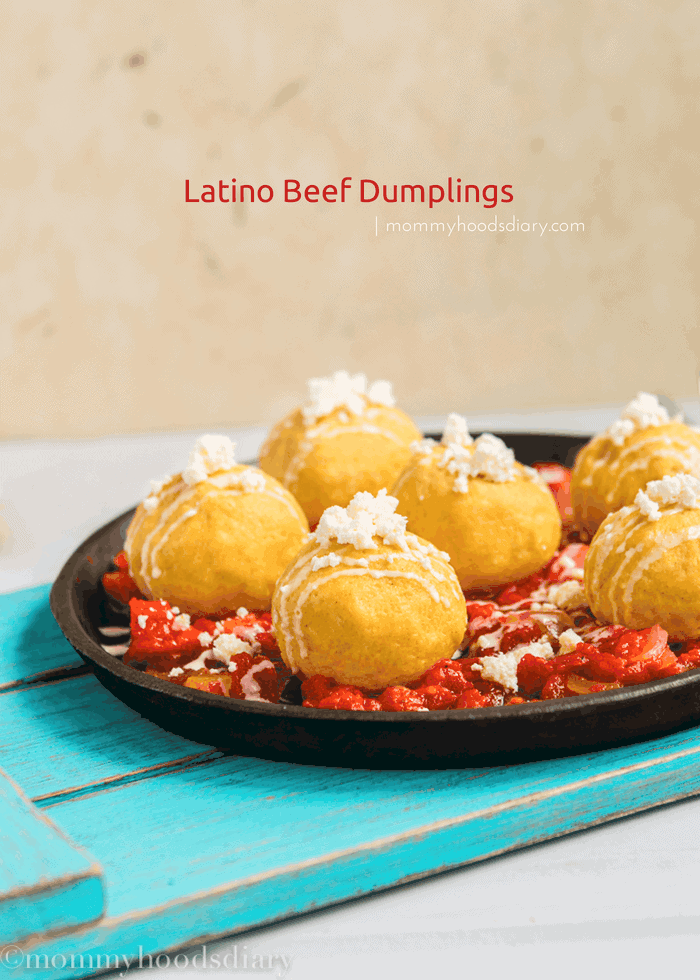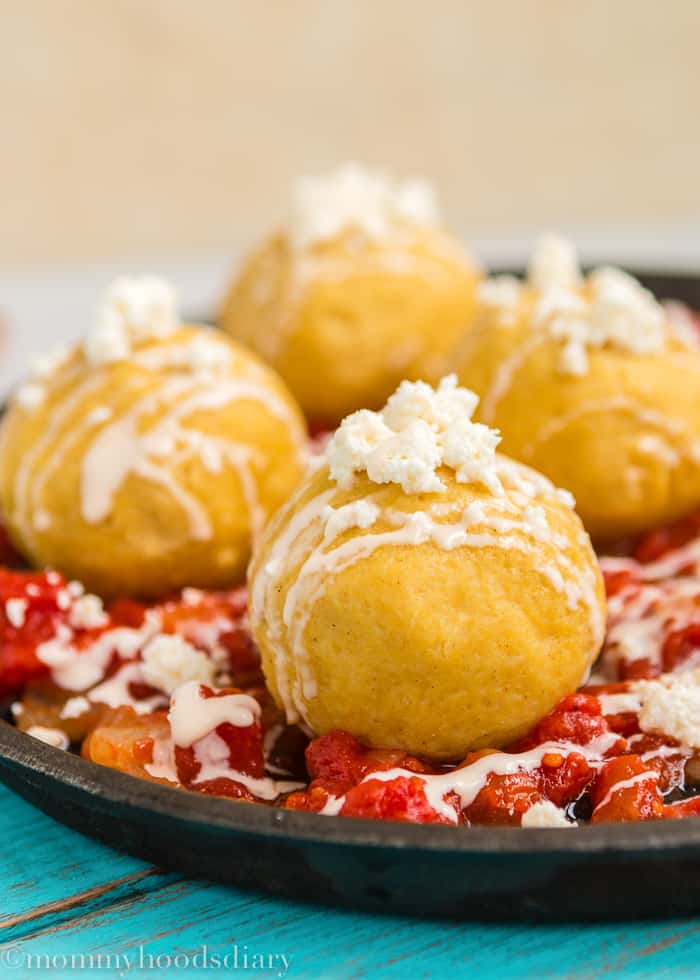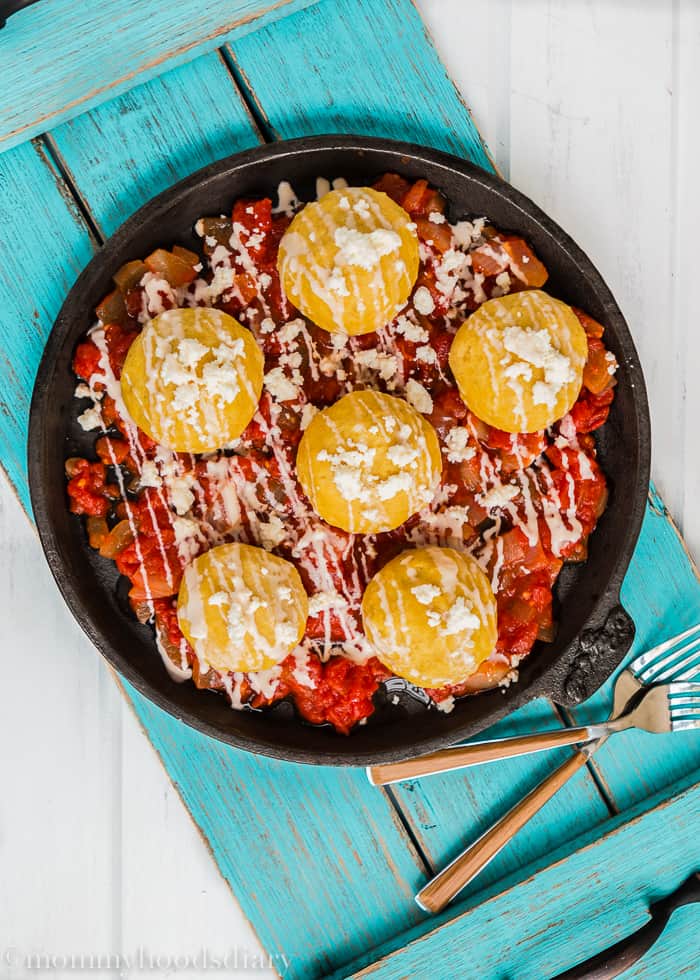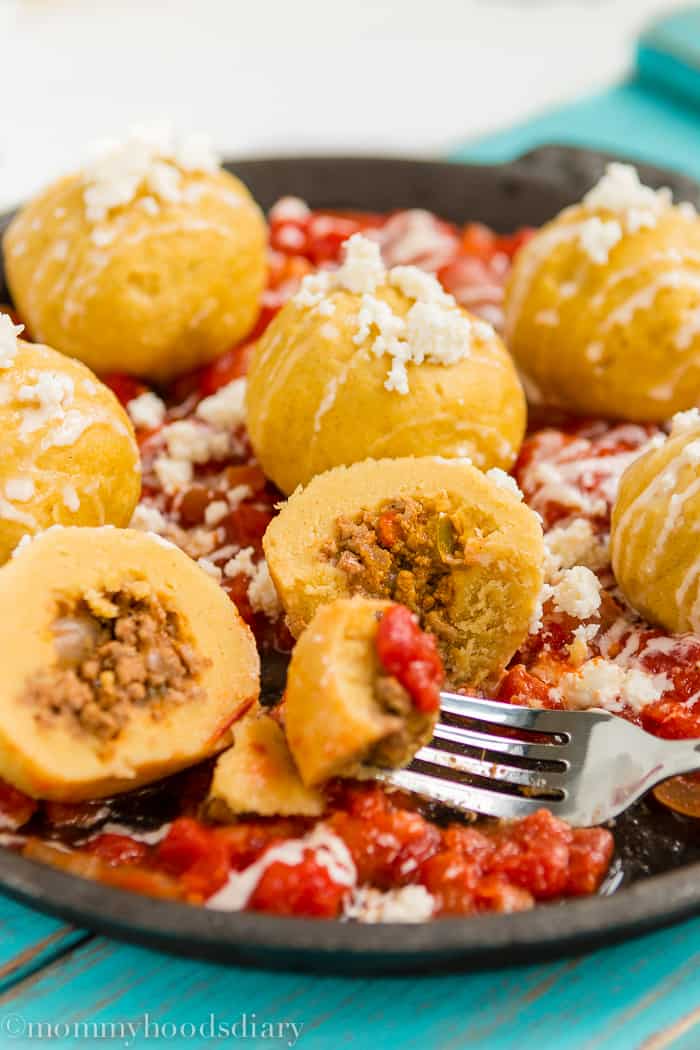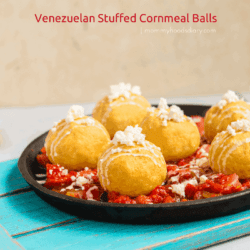


Venezuelan Bollos Pelones are one of those deeply comforting dishes that taste like home — round corn dumplings stuffed with seasoned ground beef, olives, and capers, simmered until tender, and served in a rich tomato sauce. This is a staple of Venezuelan cuisine with deep roots in the Zulia region, and one of those recipes that sounds more complicated than it actually is. I always prepare the filling and sauce the night before, which makes day-of assembly a breeze — just mix the dough, stuff the balls, boil for 10 minutes, and serve. The dough is made with Harina PAN, a pre-cooked cornmeal that is naturally gluten-free, making this dish a wonderful option for anyone avoiding gluten. Whether you’re Venezuelan and craving a taste of home or discovering Latin American comfort food for the first time, this recipe is everything you hoped it would be.
Esta receta está disponible en español > Bollos Pelones Venezolanos.

Oriana’s Thoughts On The Recipe

The first time I ate Bollos Pelones was at a friend’s house. Her mother-in-law — a true veteran in the kitchen — made them from scratch for breakfast in under 30 minutes. I remember sitting there thinking: how is she doing this so fast? They were tender, flavorful, and completely unlike anything I had eaten before. For us, it was different in the best way. But it was the first and only time I had them for years, until one day I decided to just make them myself. And honestly? I had built them up in my head as something complicated. They were not. Not even close. I prepared the filling and sauce the night before, and the next morning I formed the balls and had them on the table in 20 minutes. This recipe is now a regular in our house — and I think it will be in yours too.
Here’s why you’re going to love it:
Ready to bring Venezuela to your kitchen? Let’s go. And when you make them, please leave a rating below — it means the world to me and helps other home cooks find this recipe!

What are Bollos Pelones?
Bollos Pelones (pronounced BOH-yos peh-LOH-nes) are a beloved traditional dish from Venezuela, made from pre-cooked cornmeal dough shaped into balls, stuffed with a savory meat filling, and served in a tomato-based sauce. The name literally translates to “bald” or “hairless buns” — a funny but fitting description, since unlike the hallaca (Venezuela’s iconic holiday tamale), these dumplings are not wrapped in plantain leaves. They’re smooth, round, and completely “naked,” hence the name. I love telling people that, because the look on their face is priceless.
The dish is believed to have originated in the state of Zulia during the colonial era and is considered a close cousin of the hallaca — same corn dough heritage, different format. Today you’ll find Bollos Pelones all over Venezuela, in home kitchens from Maracaibo to Caracas, eaten at any time of day — breakfast, lunch, or dinner — and served as appetizers at birthdays and family gatherings. They are, in every sense, Venezuelan comfort food at its finest.
The 3 Components That Make This Dish — What You’ll Need And Why It Matters

Bollos Pelones are made up of three separate pieces that come together at the end — and once you understand each one, the whole recipe makes a lot more sense.
The Dough: This is the simplest part. Just three ingredients: Harina PAN, warm chicken broth, and a little corn oil. You mix it, let it rest for five minutes, and it comes together into a soft, pliable dough — the same dough used to make arepas. It shouldn’t crack when you press it; it should feel smooth and workable, almost like Play-Doh. That’s how you know it’s ready.
The Filling: This is where all the flavor lives. It’s a classic Venezuelan guiso — ground beef cooked low and slow through a sofrito of onion, garlic, bell pepper, leeks, and scallions, finished with tomato paste, a splash of sweet red wine, green olives, and capers. Don’t skip the olives and capers. I know it might seem like an odd addition, but they give the filling that deep, briny, unmistakably Venezuelan flavor that makes this dish taste like home. The filling needs to be cooked until most of the liquid has evaporated — dry enough to hold its shape inside the dough without making it soggy.
The Sauce: The sauce is simple on purpose — onion, diced tomatoes, salt, and pepper, simmered until it turns deep red and thick. It doesn’t compete with the filling; it completes it. Once you spoon it over the bollos, it soaks into the dough just enough to make every bite incredibly satisfying. Don’t rush it. Give it the full 20–25 minutes to develop.
Substitutions
Can I use a different filling? Absolutely. The classic version uses ground beef, but Bollos Pelones are made all over Venezuela with shredded beef (carne mechada), shredded chicken, ground pork, and even shark in coastal regions. The dough and sauce recipe stays exactly the same — just swap the filling. If you use chicken, I recommend poaching a couple of chicken breasts and shredding them fine, then cooking them through the sofrito.
Can I make these gluten-free? Good news — they already are! Harina PAN is naturally gluten-free. Just make sure to double-check the labels on your broth and any canned tomato products, as some brands add gluten-containing ingredients.
I can’t find Harina PAN — what can I use? Look for any pre-cooked white corn flour (masarepa). Brands like Areparina work well. What you cannot substitute is masa harina (for tortillas) or regular cornmeal — the texture will be completely different, and the dough won’t come together properly. If you’re in the US and can’t find it locally, it’s widely available on Amazon.
Can I make the sauce thinner or thicker? Yes — adjust the broth to reach your preferred consistency. I like it saucy and spoonable. If you want it thicker, reduce it longer on the stove. If you want it thinner, add a splash more broth.

Oriana’s Tips For Perfect Bollos Pelones
After making these many times, here is what I’ve learned:
- Wet your hands. Before forming each dumpling, wet your fingertips with a little water. This keeps the dough from sticking and makes sealing the balls much easier.
- Make the filling and sauce the day before. This is my biggest tip. The filling and sauce actually taste better the next day — the flavors deepen overnight in the refrigerator. Day-of, you only need to mix the dough and form the balls.
- Cool the filling completely before stuffing. Hot filling makes the dough soft and hard to handle. If you’re making everything same-day, spread the filling on a plate and let it cool to room temperature before stuffing.
- Simmer, don’t boil. Once you add the bollos to the pot, lower the heat to a gentle simmer. A rolling boil can cause them to fall apart. You’ll know they’re ready when they float to the surface — about 10 minutes.
- Let them rest. After removing the bollos from the water, let them rest for 5 minutes before serving. They firm up beautifully and are much easier to plate.
- Don’t overfill. About 1 to 1½ tablespoons of filling per bollo is the sweet spot. Too much filling and the dough won’t seal properly.
- Freeze them for later. Bollos Pelones freeze beautifully. See the storage section below for full instructions.
Storage, Freezing & Reheating
Refrigerator: Store cooked bollos and sauce separately in airtight containers for up to 3 days. Keeping them separate prevents the dough from absorbing too much sauce and getting mushy.
Freezer: Bollos Pelones freeze beautifully, and this is one of my favorite make-ahead meals. Freeze the cooked bollos without sauce — wrap each one individually in plastic wrap, then place in a freezer bag. They keep for up to 3 months. Freeze the sauce separately in a container. When ready to eat, thaw both overnight in the refrigerator.
Reheating: Warm the sauce in a saucepan over medium-low heat. Add the bollos directly to the sauce and heat through for about 5–8 minutes, turning gently. You can also reheat in the microwave — place bollos in a bowl, spoon sauce over them, cover loosely, and heat in 60-second intervals until warm.

What I Like To Serve With Bollos Pelones

Venezuelan Bollos Pelones
Equipment
Important
• For best results, I highly recommend using a kitchen scale to measure the ingredients.
Ingredients
For the Filling:
- 2 tablespoons (15 ml) neutral oil
- 1 cup (150 g) onion, finely chopped
- 3 cloves garlic, minced
- ½ cup (75 g) green bell pepper, diced
- ½ cup (45 g) leeks, sliced (white and pale-green parts only)
- ¼ cup (25 g) scallions, sliced
- 1 lb (454 g) ground beef
- Salt and pepper to taste
- 2 tablespoons (32 g) tomato paste
- 1/4 cup (60 ml) sweet red wine (Marsala works beautifully)
- 23–25 green olives stuffed with red pepper, sliced
- 2 tablespoons capers, drained and finely chopped
For the Sauce
- 2 tablespoons (15 ml) neutral oil
- 1 cup (150 g) onion, finely chopped
- 1 can (28 oz / 794 g) diced or crushed tomatoes
- 1/2 cup (120 ml) water
- Salt and pepper to taste
For the Dough
- 2½ cups (590 ml) chicken broth, warm
- 3 cups (420 g) Harina PAN (pre-cooked white corn flour)
- 2 tablespoons (15 ml) neutral oil
To serve
- 8 oz (226 g) queso fresco or queso para rallar, crumbled (optional)
Instructions
Make the filling:
- Heat the oil in a medium saucepan over medium-high heat. Add the onion and sauté until translucent and soft, about 3–4 minutes. Add the garlic, bell pepper, leeks, and scallions; cook for 5 minutes, stirring occasionally, until the vegetables are tender and fragrant. Add the ground beef and break it apart with a wooden spoon. Season with salt and pepper. Cook until the beef is no longer pink, about 5 minutes. Stir in the tomato paste, wine, olives, and capers until well combined. Reduce the heat to low and simmer for 10–15 minutes, or until most of the liquid has evaporated and the filling looks thick and cohesive. Remove from heat and set aside to cool completely before assembling.Note: The filling should not be too juicy because it could soften the dough too much and could fall apart when cooking
Make the sauce (You can do this simultaneously while the filling simmers):
- In a small saucepan, heat the oil over medium heat. Add the onion and sauté until transparent, about 3 minutes. Add the diced tomatoes and water. Then season with salt and pepper. Cover and simmer for 20–25 minutes, stirring occasionally, until the sauce thickens and turns a deep red. Remove from heat and set aside.
Make the dough:
- In a large bowl, combine the warm chicken broth and Harina PAN. Mix well until no lumps remain. Let stand for 5 minutes, then add the oil and knead until smooth and soft — it should feel like Play-Doh and not crack when pressed. Divide into 14 equal-sized balls.
Assemble:
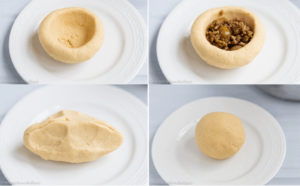
- Wet your fingertips with a little water. Press your thumb into the center of one dough ball to create a deep cup. Add 1–2 tablespoons of the cooled filling. Bring the edges up and pinch firmly to seal. Re-roll into a smooth ball. Repeat with all remaining dough and filling.
Cook:
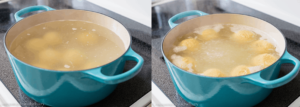
- Fill a large pot halfway with water and bring to a boil over medium-high heat. Reduce to a gentle simmer. Carefully lower the bollos into the water. Cook for about 10 minutes until they float and feel firm when pressed gently. Transfer with a slotted spoon to a serving dish.
Serve:
- Spoon warm tomato sauce over the bollos. Top with crumbled queso fresco and Venezuelan nata, if desired. Serve immediately.
- Wet your hands. Before forming each dumpling, wet your fingertips with a little water. This keeps the dough from sticking and makes sealing the balls much easier.
- Make the filling and sauce the day before. This is my biggest tip. The filling and sauce actually taste better the next day — the flavors deepen overnight in the refrigerator. Day-of, you only need to mix the dough and form the balls.
- Cool the filling completely before stuffing. Hot filling makes the dough soft and hard to handle. If you’re making everything same-day, spread the filling on a plate and let it cool to room temperature before stuffing.
- Simmer, don’t boil. Once you add the bollos to the pot, lower the heat to a gentle simmer. A rolling boil can cause them to fall apart. You’ll know they’re ready when they float to the surface — about 10 minutes.
- Let them rest. After removing the bollos from the water, let them rest for 5 minutes before serving. They firm up beautifully and are much easier to plate.
- Don’t overfill. About 1 to 1½ tablespoons of filling per bollo is the sweet spot. Too much filling and the dough won’t seal properly.
- Freeze them for later. Bollos Pelones freeze beautifully. See the storage section below for full instructions.
Nutrition
Nutrition information provided is an estimate and will vary based on cooking methods and brands of ingredients used.


Thank you for the Bollos Pelones recipe. I will make this in honor of my Venezuelan neighbors. I hope they will be pleasantly surprised and enjoy this delicious food when they come to visit.
Hi Tere! What a lovely and thoughtful gesture—I’m sure your Venezuelan neighbors will be delighted and touched! Bollos Pelones are such a comforting and traditional dish, and it’s wonderful that you’re sharing it to celebrate their culture. I hope it turns out beautifully and that everyone enjoys it. Thank you for giving the recipe a try—it means so much!
Hi just discovered your wonderful blog ! I love this dish made By some long ago Venezuelan friends but. When I’ve had this dish it is made with arena pan , will your dough recipe work with arena pan? If not do you have the dough recipe for it ? Ty so much in advance
Hello Maria! yes, you can use the same proportions of Harina PAN, just reduce the oil quantity to 2 tablespoons. Please let me know how they turn out =)
Hi Oriana…
About 25 years ago my friend’s neighbor (Patty from Venezuela) made a variation of this recipe at her husband’s birthday party. The cornmeal dough was lemony and the inside was tuna with mayo and scallion…They were approximately 1/3rd bigger than the ones in your photo….They were so delicious it was one of the most memorable things I ever ate….
Have you ever made a variation like that?
Oh my! I’d make the bollos pelones too. I would make this with ground turkey! I’d also try making corn tortillas (or learning how to since I married a Mexican guy. He would be surprised!). Thanks for this great post!
I would make the dumplings but add some raisins to the filling like my old babysitter used to do in her tamales.