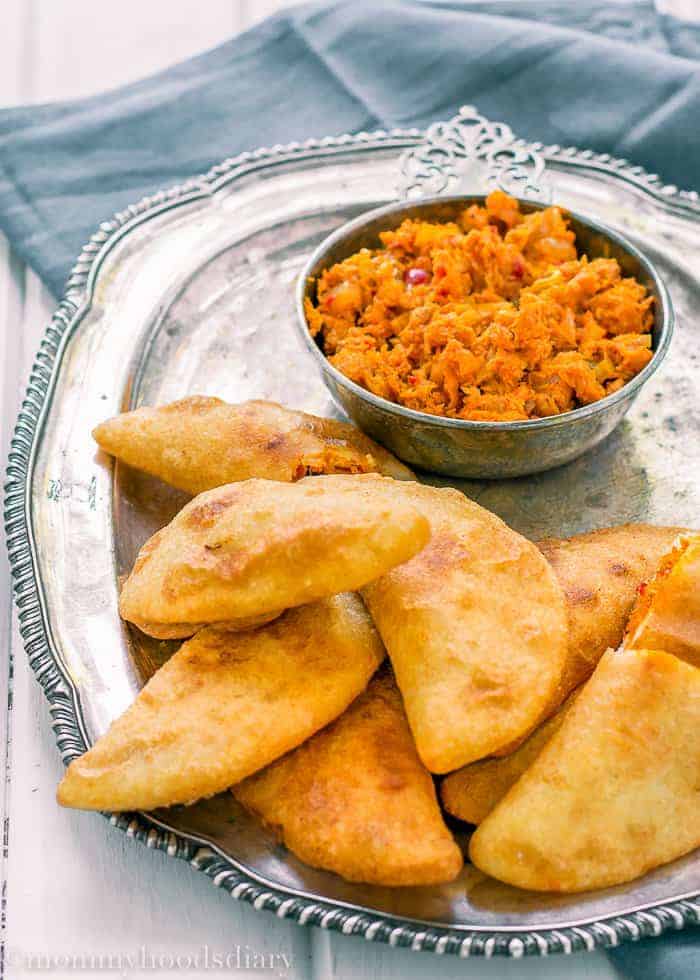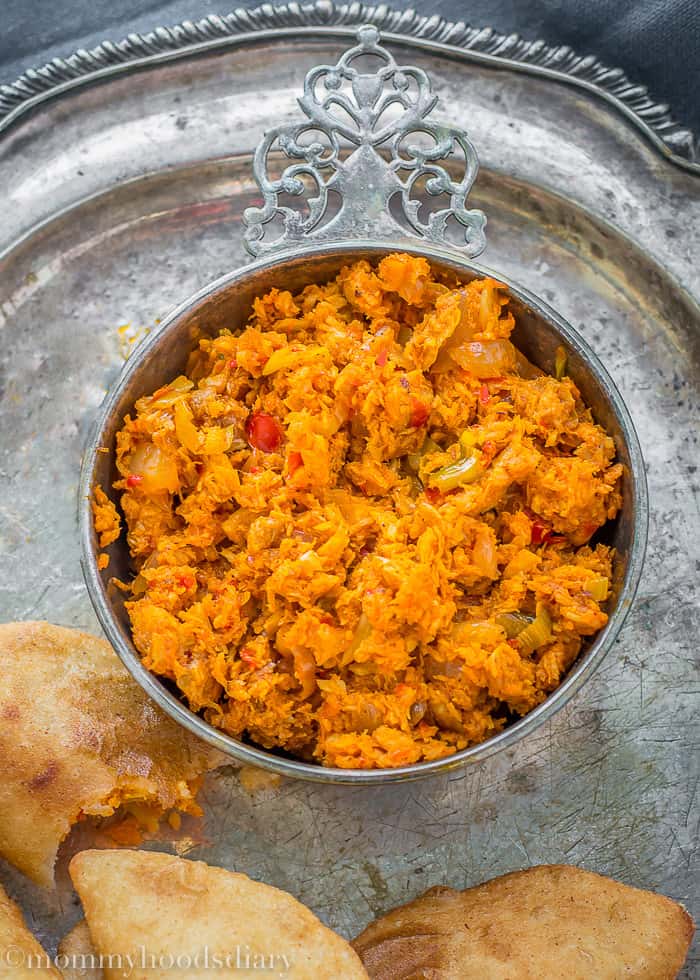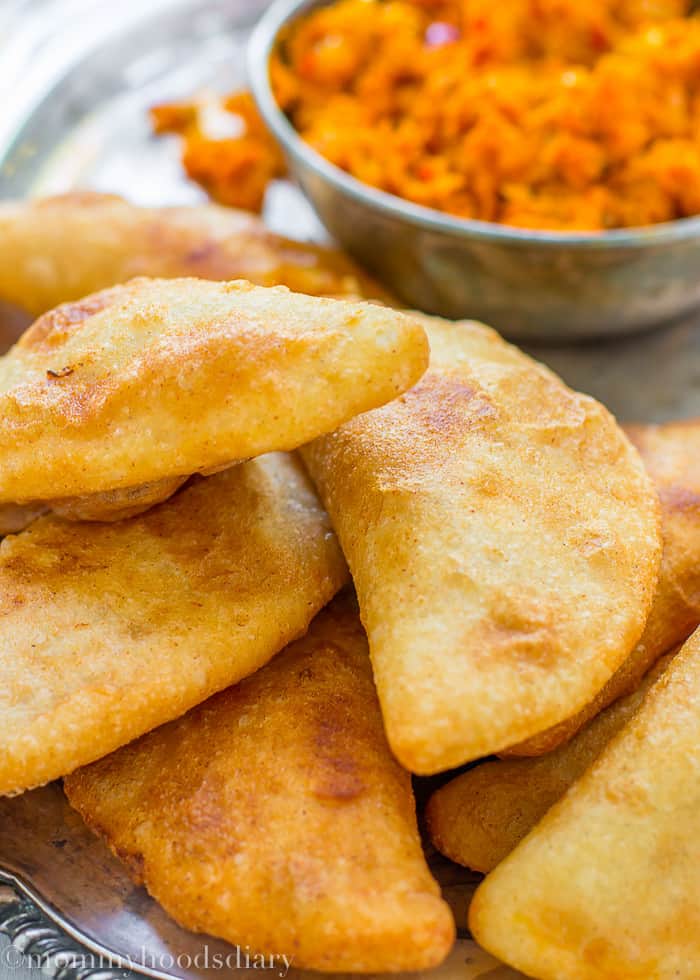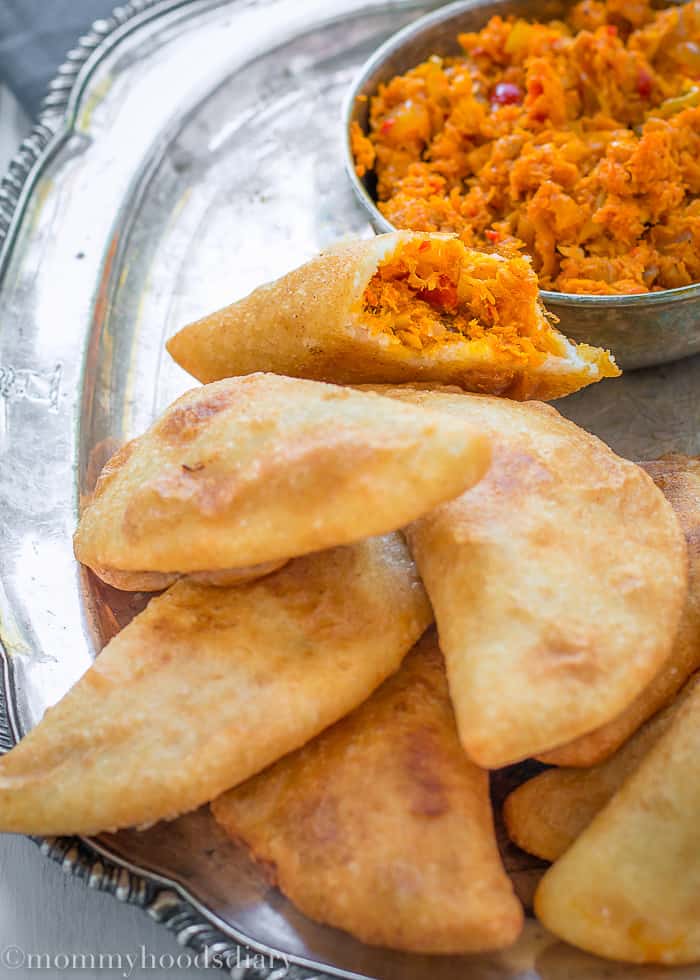


Venezuelan Cazón Empanadas are the most iconic street food in Venezuela — golden, crispy corn dough stuffed with savory shark filling cooked through a classic sofrito. I grew up eating these from beach vendors, and after years of failed substitutes in the US, I finally cracked it: shark steaks from your local Asian market are the perfect cazón replacement. The dough is made with Harina PAN — it fries up crispy and light and absorbs far less oil than any flour-based empanada. This is the real thing, and now you can make it at home.

Oriana’s Chit-Chat Corner

Growing up in Venezuela, going to the beach without stopping for empanadas was simply unthinkable. My husband refused to eat street food without a sanitary permit on the wall, LOL — I had no such requirements. Cazón empanadas were my everything, and I ate them every single time I had the chance.
When we moved to the United States, I spent years trying to recreate them — dogfish, cod, tilapia — and nothing worked until a friend said: Try shark steaks from the Asian market.
That was the moment everything clicked. One bite and I was right back on that beach.

What Are Venezuelan Empanadas?
Venezuelan empanadas are a beloved street food and home staple made with a corn-based dough — completely different from the wheat flour empanadas found in Argentina, Chile, or Colombia. The dough is made with Harina PAN, the same pre-cooked white corn flour used to make arepas, which gives Venezuelan empanadas their signature golden color, crispy exterior, and naturally gluten-free profile. They are shaped into a half-moon, stuffed with a savory filling, and deep-fried until golden.
What makes them truly special is how the corn dough behaves when fried — it crisps up beautifully on the outside while staying tender inside, and it absorbs far less oil than flour-based dough. You can fill them with almost anything: cheese, shredded chicken, seasoned ground beef, black beans and cheese, or the most iconic filling of all — cazón. In Venezuela, empanadas are everywhere: morning snacks, beach food, party appetizers, late-night street food. They belong at every table and every occasion.
What Is Cazón — And Where To Find It
Cazón is a small species of shark found along the Venezuelan coast, and it is the classic, traditional filling for Venezuelan empanadas — especially in the eastern coastal states. The meat is firm, mildly flavored, and absolutely perfect inside a crispy corn empanada. It’s the filling I always associate with the beach, with summer, and with Venezuela.
Here in the United States, cazón is not available. I tried several substitutes over the years — dogfish, cod — and none of them were right. Then a friend gave me the tip that changed everything: shark steaks. You can find them at most Asian grocery markets, and the flavor and texture are almost identical to cazón. It is the closest substitute I have ever found, and the one I use every single time.
If you cannot find shark steaks, a firm white fish like mahi-mahi or grouper will work — the texture is different, but the seasoning carries the filling. Just avoid anything flaky or delicate, like tilapia; it will fall apart in the filling.

Ingredients — What You’ll Need And Why It Matters
- Shark Steaks (Cazón substitute): The heart of this recipe. Look for them at your local Asian market — they’re usually sold fresh or frozen and are labeled simply as “shark steak.” Buy enough for 4 steaks and poach them gently before shredding. Make sure to remove any skin or small bones before adding to the filling.
- Achiote Oil (Onoto / Annatto Oil): This is the flavor and color base of Venezuelan cooking. Achiote seeds infused in oil create a deep orange-red oil that gives the sofrito its warmth and color. You can make it at home in 5 minutes (see the recipe card notes) and store it in the refrigerator for months. Do not skip it — it is not just about color. It adds a subtle, earthy flavor that is distinctly Venezuelan.
- The Sofrito Base (Onion, Bell Pepper, Sweet Peppers, Leeks, Green Onion, Garlic): This combination IS Venezuelan cooking. Take your time with it — let everything soften properly before adding the shark. The leeks and sweet peppers in particular give the sofrito a slight sweetness that balances the savory fish beautifully.
- Cumin: Just one teaspoon, but it matters. Cumin is the spice that ties the filling together and gives it that warm, slightly smoky depth that makes it taste like home.
- Harina PAN (Pre-cooked White Corn Flour): This is non-negotiable for authentic Venezuelan empanadas. It is not the same as masa harina (used for tortillas) or regular cornmeal. Harina PAN is pre-cooked and absorbs liquid instantly, creating a soft, pliable dough that fries up golden and crispy. Look for it in the Latin food aisle of major supermarkets, at Latin grocery stores, or on Amazon.
- All-Purpose Flour + Baking Powder: This empanada dough is slightly different from plain arepa dough — the small amount of all-purpose flour and baking powder gives it a bit more structure and helps it fry up with that extra-crispy shell. Do not skip these. If you need gluten-free, you can omit the flour, but the dough will be slightly less crispy.
- Sugar: Yes, sugar in empanada dough. Just 2 tablespoons, and it makes a real difference — it helps the dough brown beautifully to that golden color and adds the faintest hint of sweetness that contrasts perfectly with the savory filling.
Substititions
Fish: If you can’t find shark steaks, the next best options are mahi-mahi or grouper — firm white fish that hold up well when shredded and seasoned. Avoid anything too delicate, like tilapia or cod, which tend to fall apart and have less flavor in the filling.
Filling: Venezuelan empanadas are versatile by nature. Classic alternatives include carne mechada, shredded chicken (pollo mechado), seasoned ground beef, black beans and white cheese (domino-style), or just cheese. The dough recipe stays exactly the same regardless of filling.

Oriana’s Tips For Perfect Cazón Empanadas
After making these for years, here is what I have learned:
- Plastic wrap is your best tool. Forget the tortilla press — place your dough ball between two pieces of greased heavy-duty plastic wrap (I cut up a large resealable bag — works perfectly), flatten gently with your hands, and peel away. This gives you a perfectly even circle without sticking.
- Make the filling the day before. The cazón filling actually tastes better the next day — the sofrito flavors deepen overnight. Make the filling on Day 1, refrigerate it, and assemble and fry on Day 2. Your future self will thank you.
- Dry your filling before stuffing. The filling should be cooked until most of the liquid has evaporated. If it’s too wet, it will steam inside the empanada and make the dough soggy. You want it thick enough to hold together when you spoon it in.
- Don’t overfill. 2 to 3 tablespoons per empanada is the sweet spot. Too much filling and the dough won’t seal properly — and then you lose everything in the oil.
- Oil temperature is everything. Use a thermometer and wait until the oil reaches 350°F before frying. Too hot and the outside burns before the inside cooks. Too cool, and the empanadas absorb grease and come out heavy. 350°F is the number.
- Fry in batches. Don’t crowd the pan. Adding too many at once drops the oil temperature and results in greasy, pale empanadas. Give each one space.
- Keep them warm in the oven. Transfer finished empanadas to a paper-towel-lined baking sheet and keep warm in a 300°F oven while you finish the rest. They stay crispy for a good 20–30 minutes this way.
What To Serve With Cazón Empanadas
Venezuelan empanadas are a full experience on their own, but the right sauce and sides make them unforgettable. Here’s what I’d put on the table:
Storage & Reheating
Best eaten fresh. Venezuelan empanadas are at their absolute best straight from the fryer — crispy, hot, and impossibly good. That said, life happens.
Refrigerator: Store leftover empanadas in an airtight container for up to 2 days. They will soften overnight — see reheating below to get the crispiness back.
Freezer (after frying): You can also freeze cooked empanadas, though they won’t be quite as crispy after reheating. Freeze individually first, then bag.
Reheating: Skip the microwave — it makes the dough soft and sad. Reheat in an air fryer at 375°F for 4–5 minutes, or in the oven on a wire rack at 400°F for 8–10 minutes. Both methods bring back most of the crispiness.
Frequently Asked Questions

Making Empanadas? You NEED these two sauces to serve with!

Venezuelan Cazón Empanadas Recipe
Video
Important
• For best results, I highly recommend using a kitchen scale to measure the ingredients.
Ingredients
For the Cazón Filling:
- 4 shark steaks approximately 700g / 1.5 lbs (see notes)
- 1 tablespoon salt, for poaching
- 1 bay leaf
- 3 tablespoons onoto oil, (a.k.a. achiote or annatto) (see notes)
- 1 cup onion, finely diced
- ½ cup green bell pepper, cut into small cubes
- 1 cup small sweet pepper, cut into small cubes
- 1 cup leeks, cleaned and sliced (white and light green parts only)
- ½ cup green onion, cleaned and sliced
- 3 garlic cloves, minced
- 1 teaspoon cumin
- Salt and pepper to taste
For the Dough:
- 2 cups (480 ml) 480 ml water
- 1 teaspoon salt
- 2 tablespoons (24 g) granulated sugar
- 1½ cups Harina P.A.N (pre-cooked white maize meal)
- ¼ cup (35 g) all-purpose flour
- 1 teaspoon (4 g) baking powder
- Oil for frying (I use corn oil)
Instructions
Make the filling:
- Place the shark steaks, bay leaf, and 1 tablespoon salt in a saucepan and cover with water. Bring to a boil over medium heat. Reduce to a simmer, cover, and cook until the fish is cooked through, about 15 minutes. Transfer the fish to a bowl and shred with a fork (be careful to remove any skin and bones). Set aside.
- Heat the achiote oil in a large skillet over medium-high heat. Add the onion, bell pepper, sweet peppers, leeks, green onions, and garlic; cook until the onion is translucent, about 3 minutes. Stir in the cumin. Add the shredded shark, mix well, and season with salt and pepper to taste. Cook over medium-low heat for about 10 minutes, until most of the liquid has evaporated. Set aside.

Make the dough:
- In a medium bowl, add water, salt, and sugar. Mix until the salt and sugar are dissolved.
- Add the Harina P.A.N, flour, and baking powder. Mix with your hands, making circular movements and breaking up any lumps that form. When smooth, let rest 5 – 10 minutes to thicken. The dough should be firm enough to hold its shape without cracking when molded. If it's too soft, add a little more Harina P.A.N; if too hard, add a little more water.
Form the empanadas:
- Divide the dough into 8 equal portions and roll into balls.

- Place one ball over the plastic wrap (cutting up a large resealable bag works perfectly). Gently flatten with your hands into a 7–8-inch circle.

- Add 2 to 3 tablespoons of filling right in the center, then use the bottom piece of plastic to fold the dough over the filling, forming a half-moon.

- Press the edges firmly to seal, then trim with a knife or press with the rim of a bowl to shape cleanly.

Fry the empanadas:
- Heat enough oil in a skillet until a deep-fry thermometer reads 350º F (180º C). Fry the empanadas in batches until golden, about 4 minutes per side. Transfer to a paper-towel-lined baking sheet and keep warm in a 300°F (150º C) oven while you finish the rest.

- Serve hot.
- Flattening the dough: Plastic wrap is your best tool – Grab any plastic bag you have on hand — a resealable bag, a produce bag, whatever’s in your drawer. Cut along the bottom and both sides so it opens up into one large flat piece of plastic. Place your dough ball in the center, fold the plastic over it, and gently flatten with your hands into a 7–8-inch circle. Peel back the plastic, fill, and fold. Works perfectly every time — no tortilla press needed!
- Make the filling the day before. The cazón filling actually tastes better the next day — the sofrito flavors deepen overnight. Make the filling on Day 1, refrigerate it, and assemble and fry on Day 2. Your future self will thank you.
- Dry your filling before stuffing. The filling should be cooked until most of the liquid has evaporated. If it’s too wet, it will steam inside the empanada and make the dough soggy. You want it thick enough to hold together when you spoon it in.
- Don’t overfill. 2 to 3 tablespoons per empanada is the sweet spot. Too much filling and the dough won’t seal properly — and then you lose everything in the oil.
- Oil temperature is everything. Use a thermometer and wait until the oil reaches 350°F before frying. Too hot and the outside burns before the inside cooks. Too cool, and the empanadas absorb grease and come out heavy. 350°F is the number.
- Fry in batches. Don’t crowd the pan. Adding too many at once drops the oil temperature and results in greasy, pale empanadas. Give each one space.
- Keep them warm in the oven. Transfer finished empanadas to a paper-towel-lined baking sheet and keep warm in a 300°F oven while you finish the rest. They stay crispy for a good 20–30 minutes this way.
Nutrition
Nutrition information provided is an estimate and will vary based on cooking methods and brands of ingredients used.


These are fantastic! 2 questions. I’m learning still and my dough is very delicate. How can I keep it from breaking? Also, what tools do you use to flip over the empanada in the hot oil. Thank you so much!!
Hello Karen! I’m so glad you’re enjoying them! The dough can be a little delicate at first, so don’t worry—you’re on the right track. If it’s breaking, it can happen when the dough is too dry, so try adding a little more water. If it feels too wet and starts falling apart, just mix in a bit more harina PAN until it’s easier to handle. For flipping, I usually use a slotted spoon or a pair of tongs—something that lets you gently support the empanada without splashing the oil. Once you get the feel for the dough, it really does get easier 💛 xo
Thanks for share this recipe, I’m here trying to have those tasteful plates again in my life. Your contribution is valuable, our food is really good and must be shared with the rest of the world. Blessings.
Hello Nemecio! Aww, thank you so much for your beautiful message! 💛 It truly warms my heart to know the recipes are helping bring back those special flavors into your life. I completely agree—our food is rich in love, culture, and flavor, and it absolutely deserves to be shared with the world. Thank you for being here and for your kind words. Blessings to you too! 😊✨
Thank you for sharing the flavours of Venezuela to the world; I love the way you describe our cuisine. Lots of love.
Hello Libia! Thank you so much for your kind words! It truly means a lot to me to share the flavors of Venezuela and to have people appreciate it. I’m so glad you enjoyed the way I describe our cuisine — it’s a labor of love. Sending lots of love back to you! 💖
I wanted a recipe for the dough and not the filling. I wanted to try carne mechada in empanadas and always loved the ones I bought close to Puerto Cabello on the highway to Valencia. Perfect to end a day at the beach.
Used your recipe and a tortilla press. Worked out just fine. Too hot to eat yet but in a few I will taste. Look good!
Hello Harry! I know the empanadas you refer to. We used to stopped by “El Palito” to buy empanadas every time we went to the beach. Hope this recipe satisfy your cravings.
Can I half the recipe? I only need 2 empanadas lol or there is a way to store the dough? Can I freeze it?
Hello Diana! You can definitely half this recipe. The dough can be refrigerated for up to 2 days. I don’t recommend freezing it. Thanks for your interest in my recipe. Please come back and let me know how you like it =)
Which small sweet peppers do you used? I’m from Margarita Island, now living in NY and I’ve been dying to eat some empanadas de cazon! Cotsco sells little frozen cubes of Baby Shark, it’s cazon!!! But I can’t find any small sweet peppers that I can use instead of the aji dulce that gives our cazon its particular flavor. Any tips?
Hello Diana! Yes, I know, our aji dulce is very hard to find. I usually use these little sweet peppers – https://amzn.to/2vS4LWy . It’s not exactly the same but it does the trick. Hope this helps!
Dear Oriana: I found your blog trying to learn how to make the “masa” for empanadas. I would like to share some tips with you .
Here in the States, you can find skate wings (raya), taste and texture is exactly the same as young shark. Asian people buy these in Asian markets.
Another tip: Any white flaky fish like cod, corvina even tilapia (which I hate, but it is fine to use it this way) will do it. You put the fish fillets in a bowl, pour abundant salt, cover with a cheesecloth and let it sit overnight. In the morning wash the excess of salt off and rinse it, cook in fresh water with a bay leaf for about 15 mins and then drain it with a swift and you will have the perfect cazon meat. It will have a very nice texture with a bit to it and the flavor will be amazing. Then just make your regular “alino”
Hello Tony! Thanks so much for your feedback. I will look for the skate wings next time =)
Hi I lived in Caracas many years ago .. such a beautiful city and the food amazing ,, I esp loved all the empanadas ,, I have tried recreating them at home but one thing always happens .. the pie sticks to bottom of frying pan and it’s hard to flip or unstick .. any suggestion?? Ty
Hello Maria! I think the problem could be that the dough is too moist. Next time use my recipe to make the dough and see if it works. Also, make sure you are using enough oil to fry. I always fry the empanadas in a non-stick frying pan (this is the one I use http://amzn.to/2xKcm4Y – affiliate link). Thanks for stopping by ????
What a great looking recipe, Oriana! So happy to find your blog. Now I will know where to look for Venezuelan recipes. Bookmarked! 🙂
Thank you Igor!!
The empanadas look amazing! Thanks for sharing this recipe! My husband would love this!
Thanks Corina!!
Ohlala, those are the real deal, I have hearts in my eyes! Must make for my man, he is Salvadorian and for sure will be all over these !!
Yes, they are delicious!! I’m sure he is going to love them. Thanks for stopping by ☺