

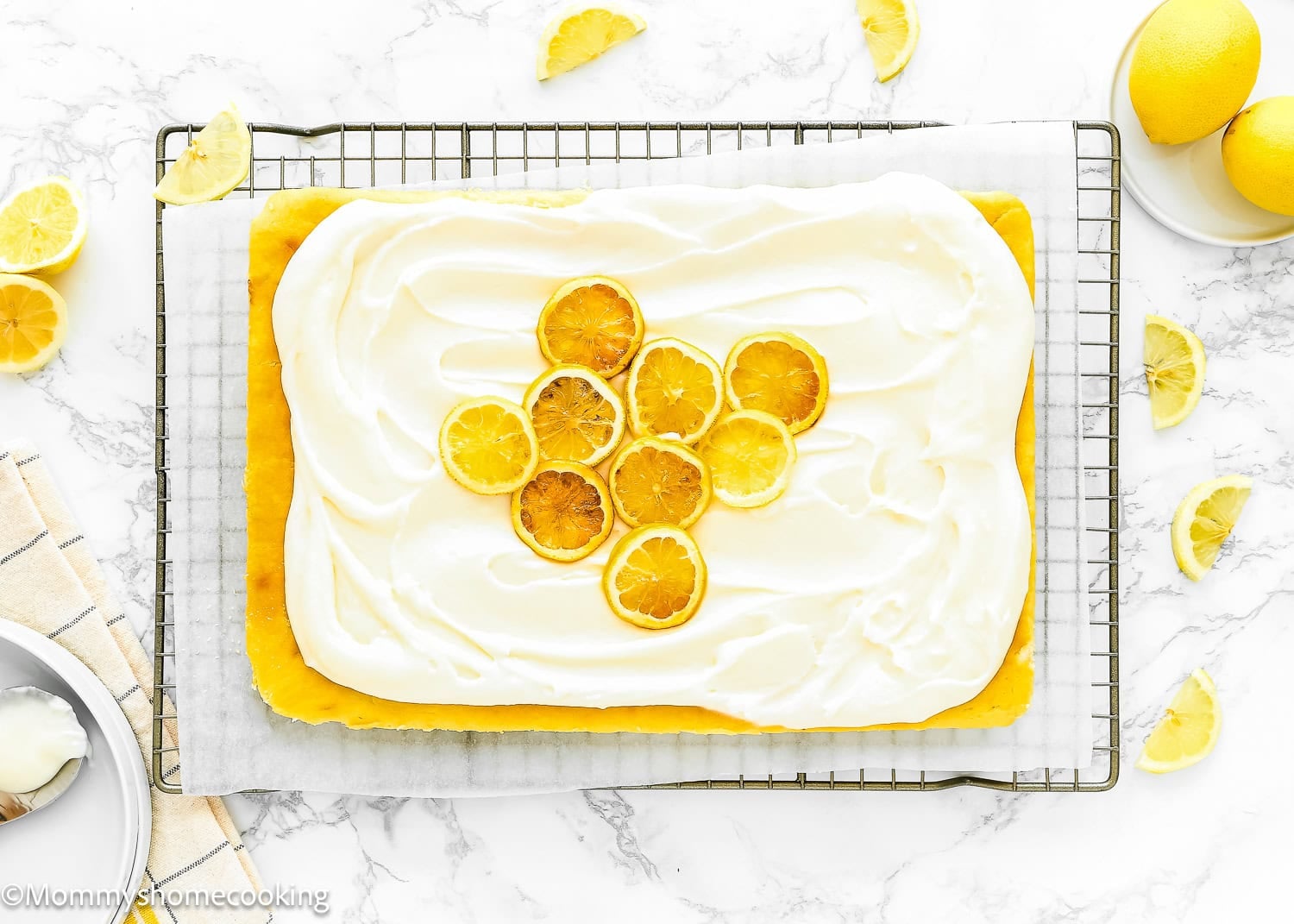
Eggless Lemon Cake is a moist, buttery cake bursting with fresh lemon and finished with silky lemon buttercream — completely without eggs. It’s egg-free by design, so there’s no replacer to buy and no gummy, dense texture; the lemon juice and milk do what eggs normally would. It comes together with basic pantry staples and one bowl, easy enough for a first-time baker. One bite, and no one will guess it’s egg-free.
Oriana’s Thoughts On The Recipe
Lemon desserts are my weakness, and this is the cake I come back to again and again. I first made it when I wanted a bright, sunny cake my egg-allergic daughter could enjoy at a spring party, and it’s been our go-to ever since. After 13+ years of baking egg-free for my family, I’ve learned that lemon cake doesn’t need eggs to be tender and moist — it needs real lemon and the right balance of acid and fat. I’ve tested this one more times than I can count, and it never comes out dense or eggy. It’s the cake I hand people when they don’t believe egg-free can taste this good.
Why You’ll Want to Try My Recipe

Is Lemon Cake Egg-Free?
Most traditional lemon cakes are not egg-free — classic recipes use two to four eggs for structure and lift. But you can absolutely make a lemon cake without eggs, and this recipe is proof. It’s designed egg-free from the start — not a regular recipe with the eggs pulled out — using the acidity of fresh lemon juice with baking soda and baking powder for rise, and butter and milk for a soft, moist crumb. No flax eggs, no store-bought egg replacer, and no rubbery texture — just a tender lemon cake that happens to be completely egg-free.
What Makes This Eggless Lemon Cake So Moist
The secret is the balance of fat and acid. Creaming real butter with sugar builds a soft, fine crumb, while whole milk keeps everything tender and rich. The star is the fresh lemon juice: its acidity reacts with the baking soda to create lift — the job eggs would normally do — and it keeps the cake moist without weighing it down. That’s why this cake stays soft for days and never tastes eggy or dry. If you’ve ended up with dry or gummy eggless cakes before, this balance is exactly what fixes it.
Ingredients You’ll Need, Substitutions & Notes

Scroll down to the recipe card for all the details, including measurements and instructions
- Flour: Standard all-purpose flour works best here; skip the cake flour, bread flour, and wheat flour. Make sure to measure accurately. In my opinion, a kitchen scale is the best way to measure your ingredients.
- Baking powder and baking soda: Make sure they’re not expired or too old.
- Salt: I prefer kosher or sea salt. If you only have table salt handy, I recommend reducing the amount to half.
- Butter: I prefer to use unsalted butter, but if you only have salted butter handy, you can use it. In this case, skip the salt called for in the recipe.
- Sugar: Regular white granulated sugar or caster sugar. I do not recommend reducing the amount of sugar or changing the type of sugar, as it will change the cake’s texture.
- Fresh Lemons: You’ll need both the juice and the zest — and please use fresh, not bottled. Bottled lemon juice tastes flat and slightly bitter, and the zest is where the fragrant lemon oils live, so fresh lemons are what give this cake its bright flavor. You’ll need about 5–6 lemons for the ½ cup of juice plus the zest. Beyond flavor, the lemon juice is doing real work — its acidity reacts with the baking soda to help the cake rise, which is part of how this cake stays light and tender without any eggs.
- Milk: Whole milk gives the best, richest crumb, but any milk you have works.
Food Allergy Swaps
This recipe is naturally egg, nut, peanut, and sesame-free, making it suitable for most dietary needs. However, always check labels for hidden allergens.
- Dairy-Free: To make this recipe dairy-free, you can easily swap out the dairy ingredients for non-dairy alternatives.
- Butter: Substitute butter with dairy-free butter substitutes. Miyoko’s Creamery Organic Vegan Butter and Earth Balance Vegan Buttery Sticks are my favorite butter substitutes for baking.
- Milk: You can use your favorite non-dairy milk, like soy or oat milk.
- Gluten-Free: Use a gluten-free, all-purpose flour blend. Look for a gluten-free flour blend specifically formulated for baking, as it will have the right combination of flours and starches to mimic the texture of wheat flour. My favorite is Better Batter Original Blend. I also like Doves Farm Freee Gluten-Free All-Purpose Flour, but this blend does not contain xanthan gum, so you need to add 1/4 teaspoon of xanthan gum per cup (140 g) of gluten-free flour blend.
Process Overview: Step-by-Step Photos
Please check the recipe card at the bottom of the post for exact quantities and detailed instructions (scroll down).
Step 1 – Prepare the Lemons
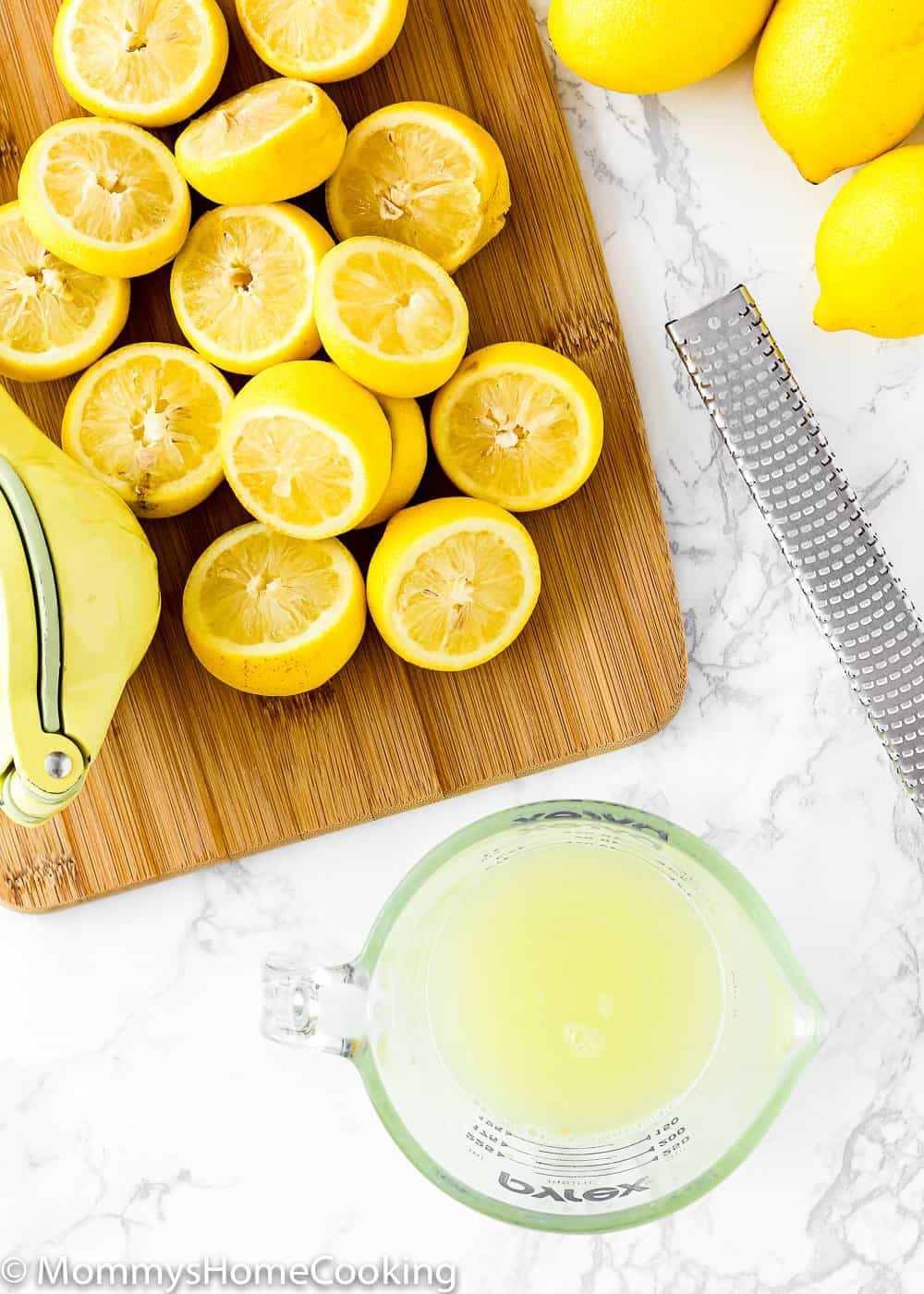
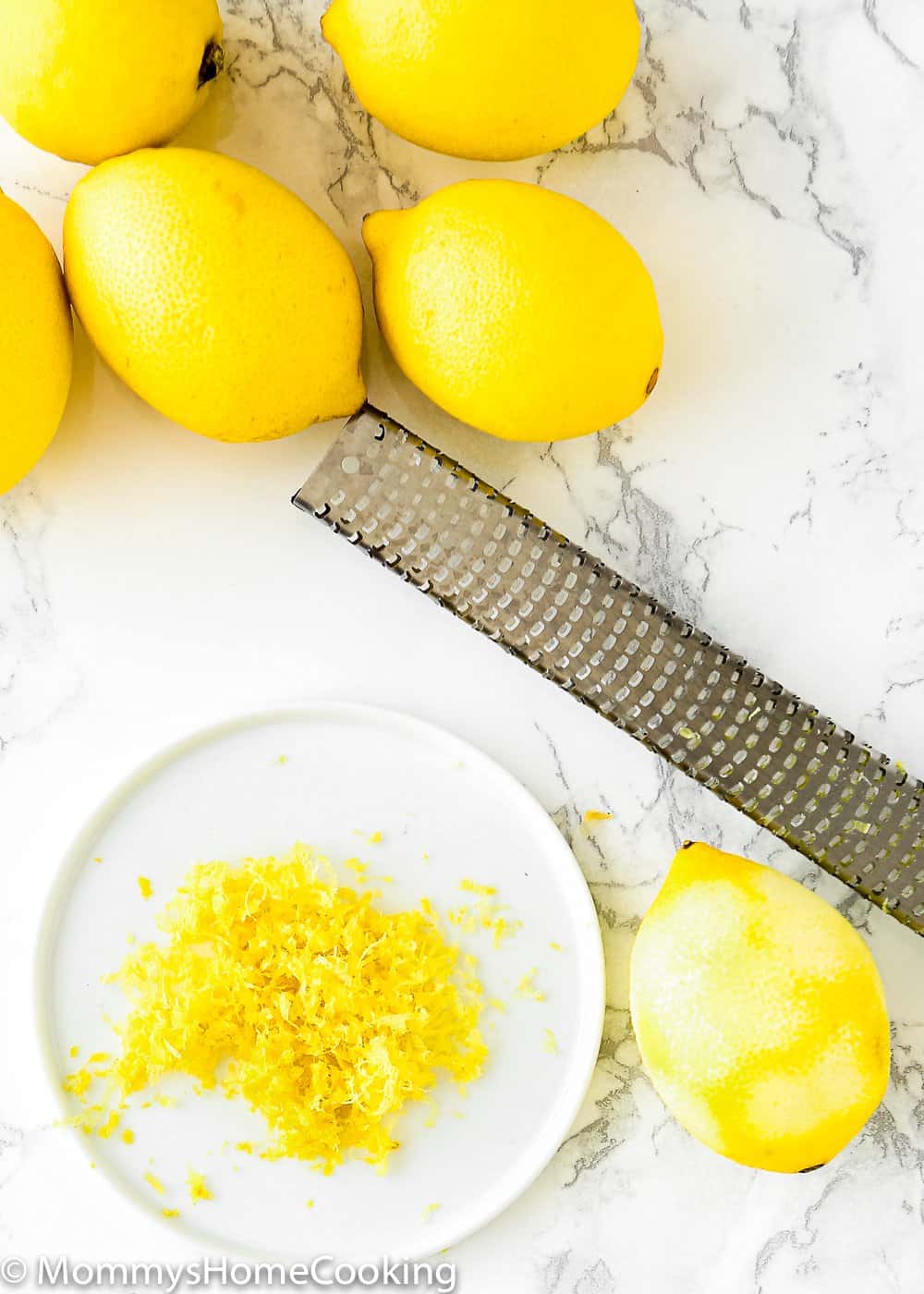
First, zest a lemon and squeeze 5-6 lemons, approximately. Get ½ cup of lemon juice. Set aside
Step 2 – Make the Batter
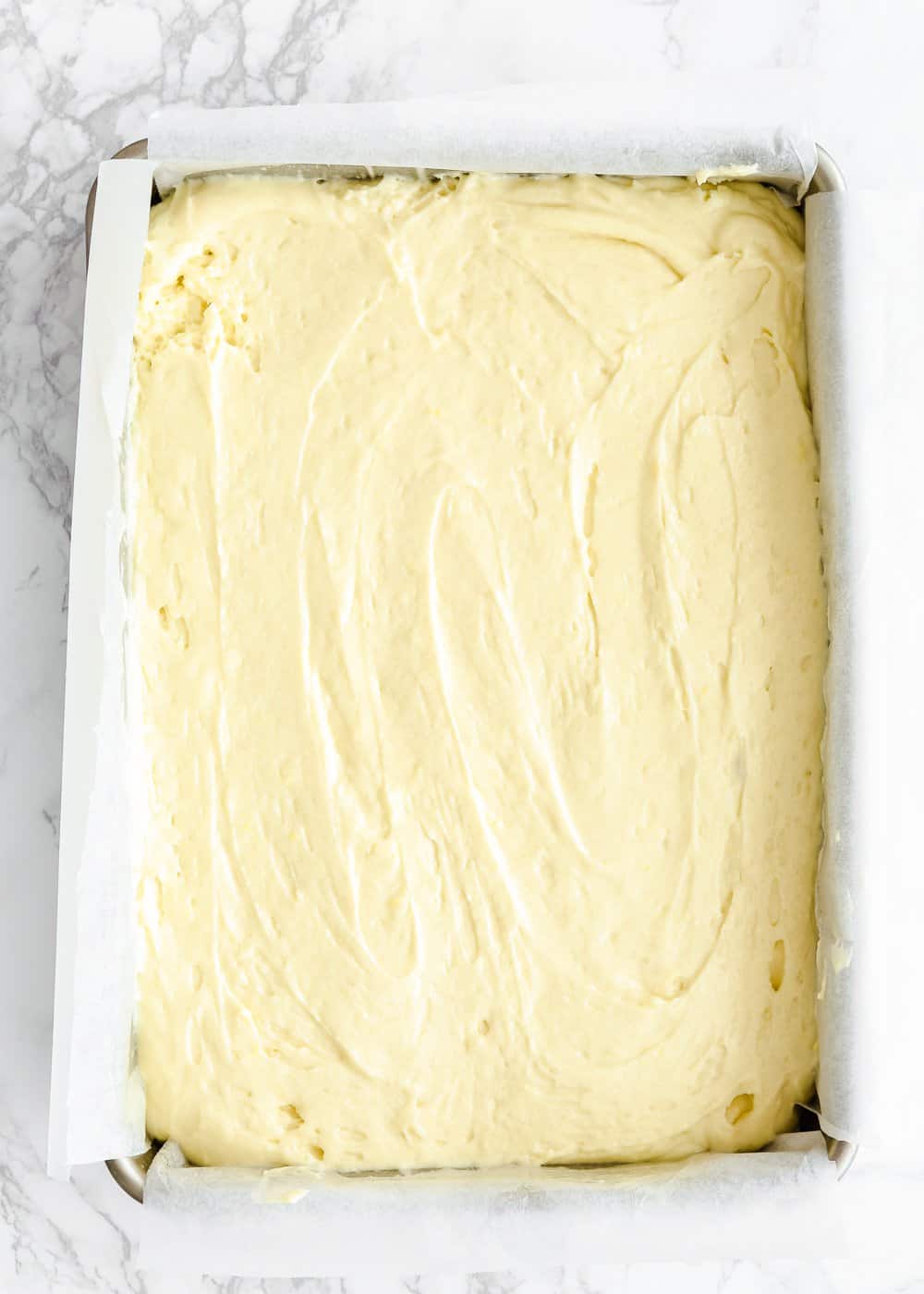
Cream butter + sugar. Then, add lemon juice, milk, and lemon zest. Next, add dry ingredients: all-purpose flour, baking powder, baking soda, and salt, and mix until just combined.

Step 3 – Bake
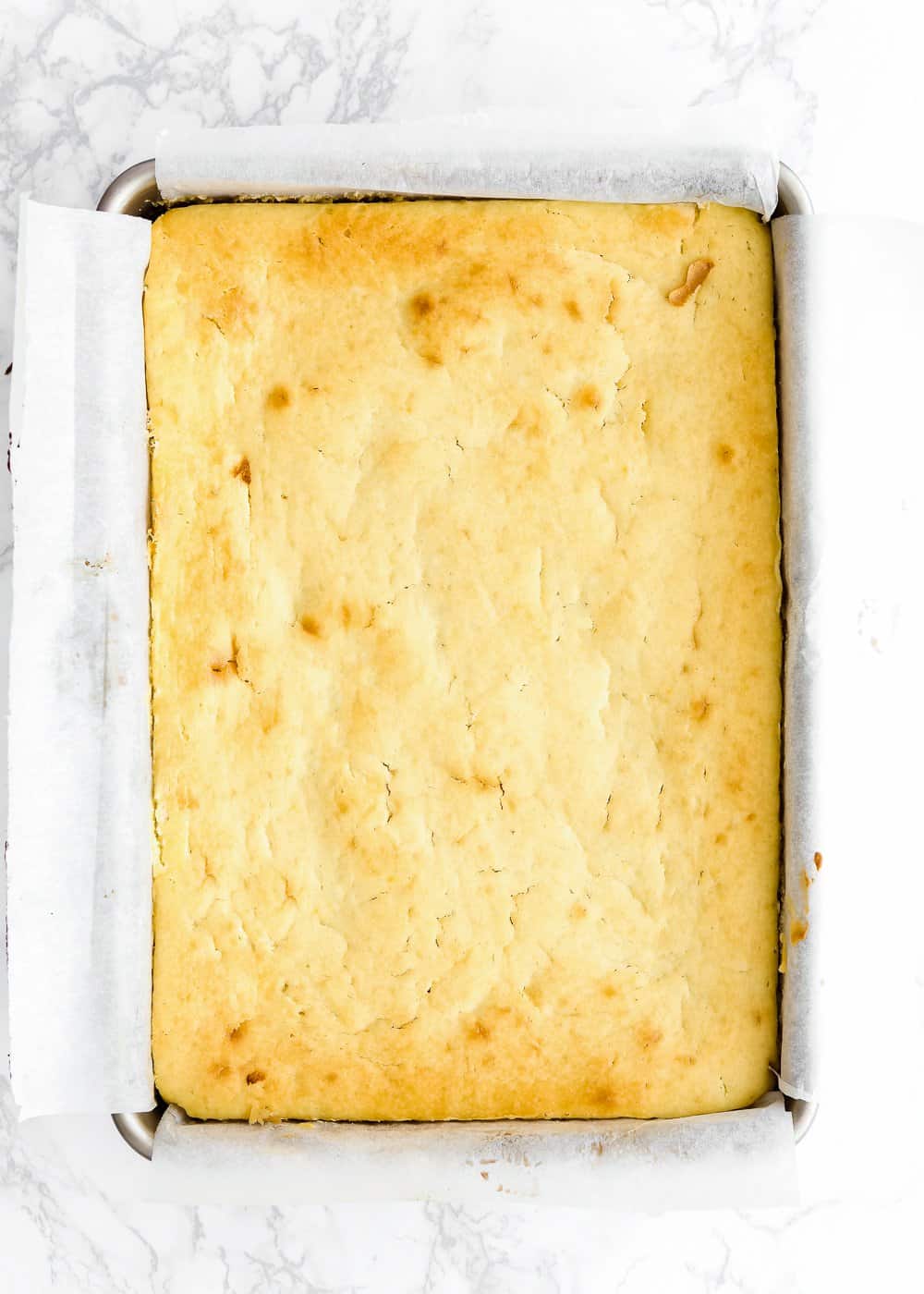
Bake at 350º F for 40-45 minutes.

Step 4 – Frost
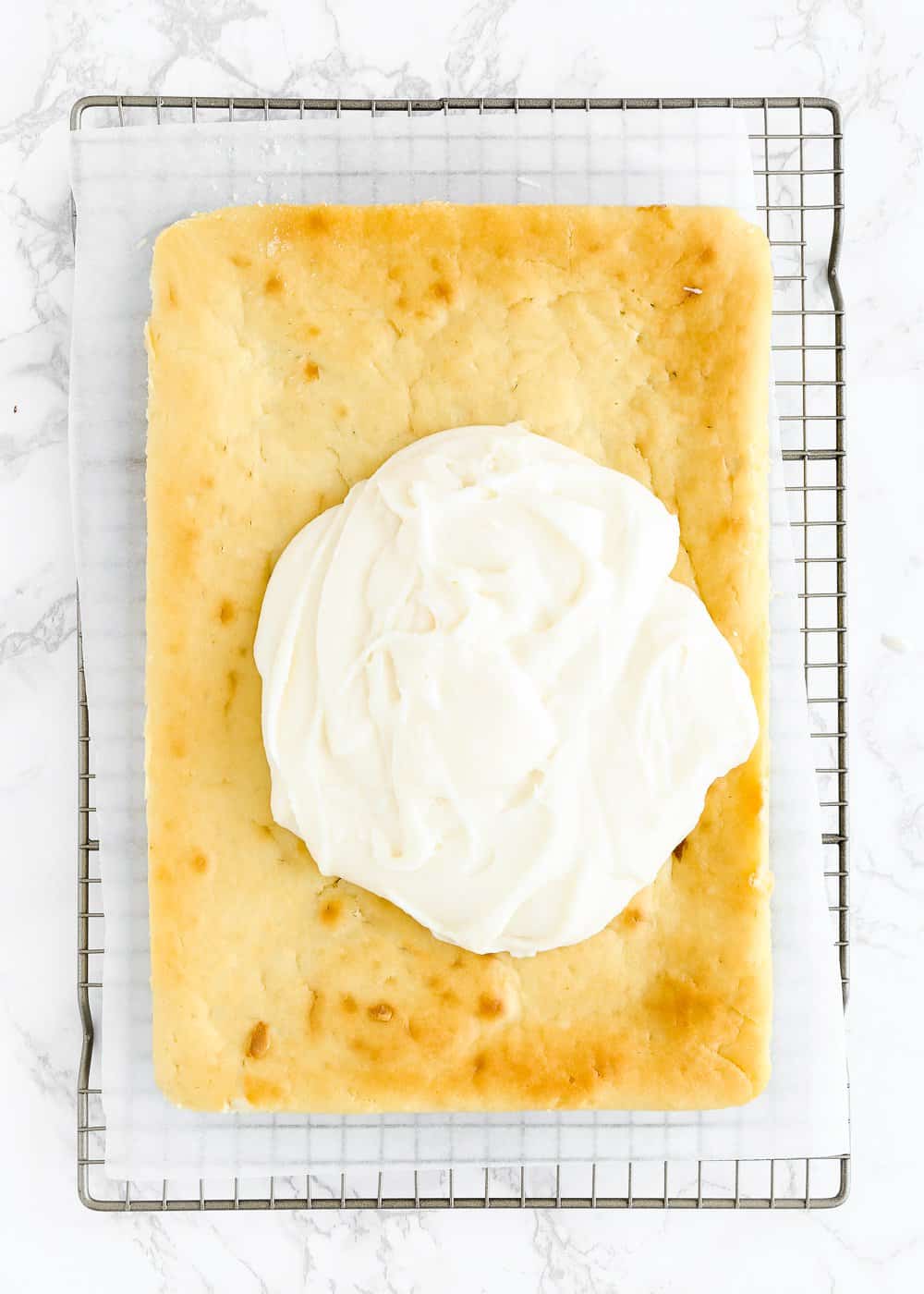
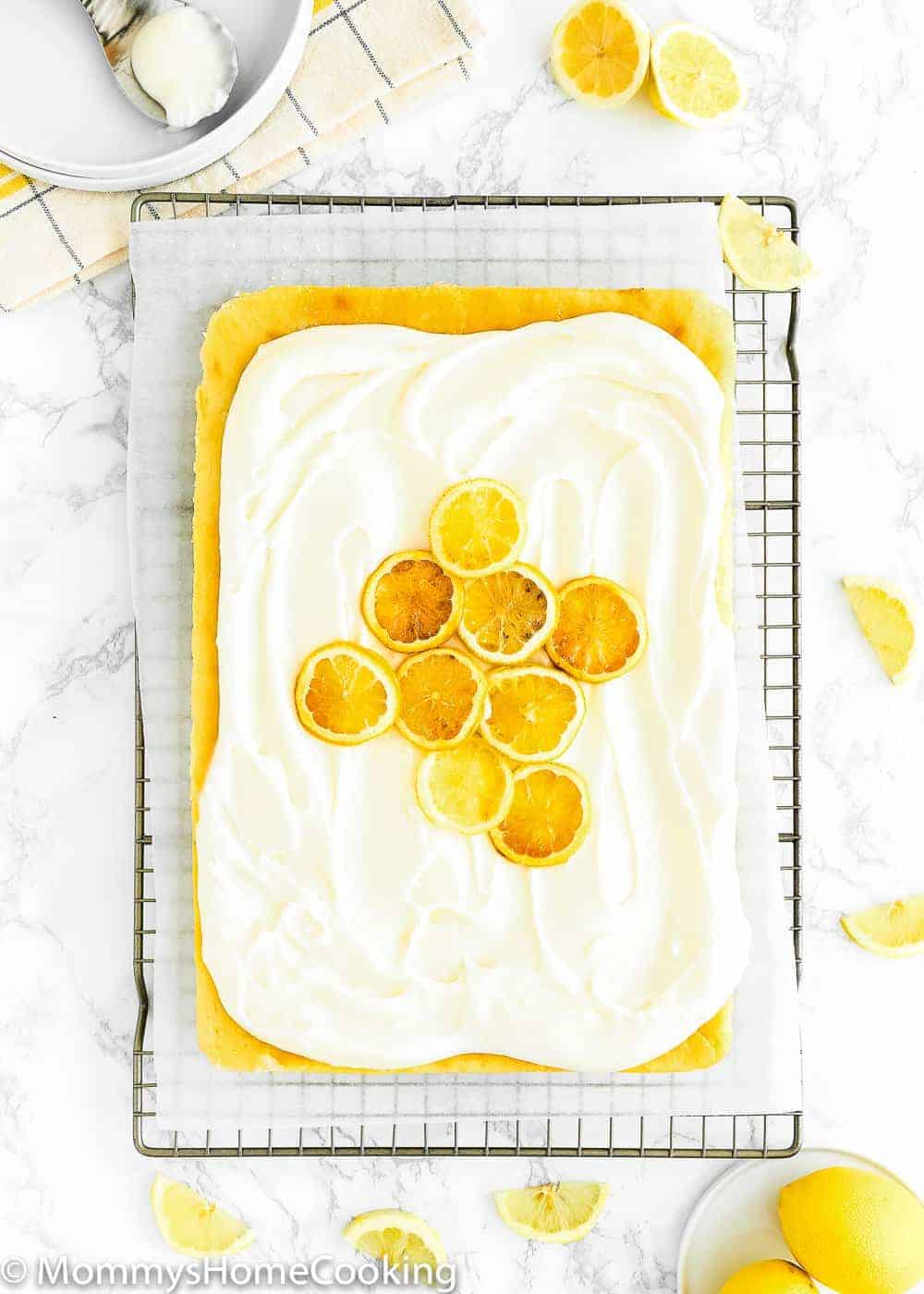
Decorate as your heart desires and enjoy!

Lemon Cake Troubleshooting
- My cake turned out dense. The usual culprit is too much flour or overmixing. Spoon and level your flour (or better, weigh it), and stop mixing the moment the batter comes together — overworking develops the gluten and makes the crumb heavy.
- It’s not lemony enough. Reach for more zest, not more juice. The zest holds the fragrant lemon oils, so an extra teaspoon brightens the flavor far more than adding liquid, which can throw off the batter.
- The middle sank. This almost always means the oven door opened too early or the cake was slightly underbaked. Keep the door closed until the minimum bake time, and test with a toothpick before pulling it.
- The batter looked curdled after I added the lemon juice. That’s completely normal — the acid and butter separate slightly and come right back together once the flour goes in. Keep going.
Eggless Cake Success Tips
Measure the ingredients correctly. I highly recommend using a kitchen scale.
Preheat the oven for at least 15 minutes before starting the recipe, giving it plenty of time to reach the ideal temperature.
Don’t overmix the batter. Instead, mix just until the ingredients are evenly distributed throughout.
Bake the batter as soon as it is ready.
Don’t open the oven door until your baked good has set. Leave the oven closed until the minimum time is stated in the recipe.
Know your oven! Every oven is different, so baking times always have to be taken with a grain of salt. Oven thermostats can be wildly off, affecting baking time, so keep an eye on yours.

Storing & Freezing Instructions
Store:
Cover leftover cake tightly and store in the refrigerator for up to 5 days.
Freeze:
- Let the eggless lemon cake cool completely.
- Wrap it up in 2 layers of plastic wrap and then one layer of foil to avoid freezer burn.
- Place it inside a large freezer bag, such as a Ziploc bag, and freeze it for up to 2 months.
Ready to eat it? Thaw overnight in the refrigerator and bring to room temperature before slicing and serving.
Frequently Asked Questions
Absolutely. While I haven’t personally tried it, many readers have used this recipe for a layer cake. You can divide the batter between round cake pans. Bake time will vary – keep a close eye on the cakes at 20 minutes and check for doneness with a toothpick.
Yes, you can add two extra tablespoons of lemon juice. Don’t forget to take out the same amount of milk.
I find that whole milk produces the best texture for this lemon cake.
I do not recommend that. Half-and-half is too heavy for this batter. I recommend regular milk.
For cupcakes, use my Eggless Lemon Meringue Cupcakes.
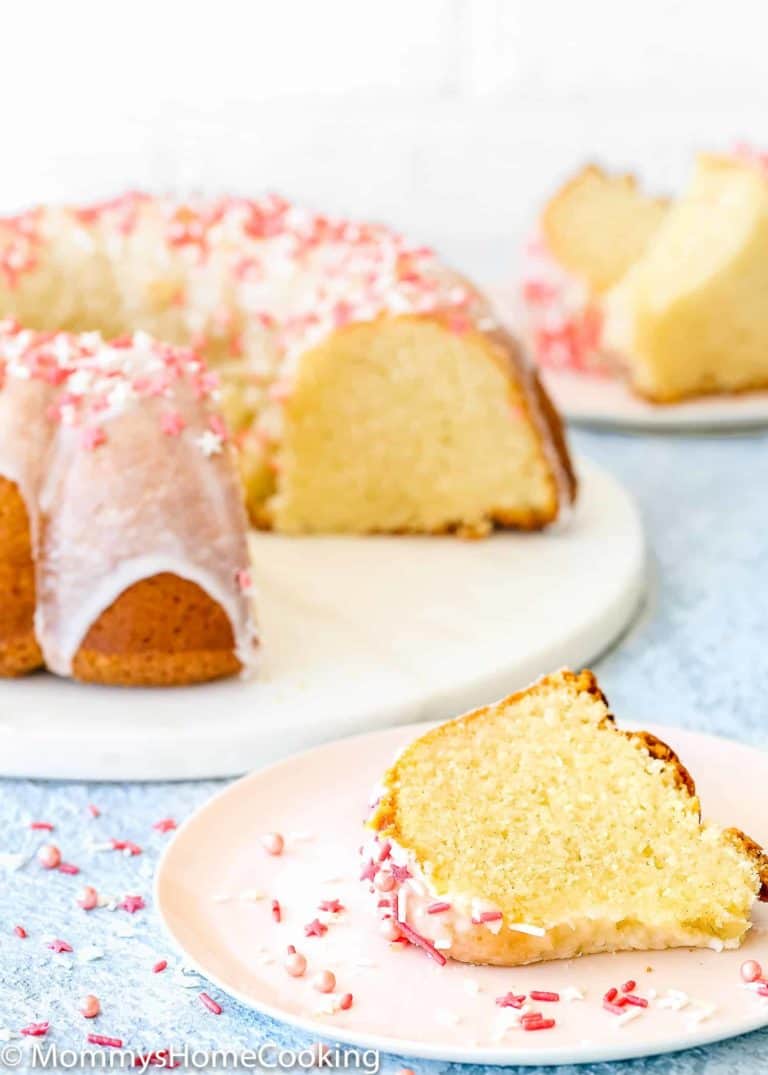
You can. Grease the pan very well (every crevice), so it releases cleanly. A bundt is deeper, so it’ll need longer in the oven — start checking around the 50-minute mark and go by a clean toothpick, not the clock.
I really don’t recommend it here. Bottled juice tastes flat and a little bitter, and you’d still need fresh lemons for the zest, which carries most of the flavor. Fresh lemons make a noticeable difference in a cake this lemon-forward.
Absolutely. A simple glaze of powdered sugar whisked with fresh lemon juice, drizzled over the cooled cake, makes a lighter, less sweet finish — lovely if you want something more casual than a frosted cake.

More Eggless Lemon Treats to Love


Recipe Card

Eggless Lemon Cake


Equipment
Important
• For best results, I highly recommend using a kitchen scale to measure the ingredients.
Ingredients
- 4 cups (560 g) all-purpose flour (see notes)
- 4 teaspoons (16 g) baking powder
- ½ teaspoon (3 g) baking soda
- ½ teaspoon kosher salt
- 1 cup (230 g) unsalted butter, softened
- 2 cups (400 g) granulated sugar
- ½ cup (120 ml) lemon juice
- 1 tablespoon lemon zest
- 1-2 drops yellow gel food coloring (optional)
- 1 1/2 cups (360 ml) milk
Lemon Buttercream:
- 1 cup (2 sticks | 230g) unsalted butter, softened
- 4 1/2 cups (540 g) confectioners’ sugar
- 2 1/2 tablespoons fresh lemon juice
- 2 tablespoons heavy cream
- 2 teaspoons lemon zest
- 1/4 teaspoon salt
Instructions
- Preheat oven to 350º F (180°C). Generously grease a 9×13-inch cake pan. You can also line the pan with parchment paper with enough overhang on the sides to easily lift the cake out.
- In a large bowl, sift flour, baking powder, baking soda, and salt. Set aside.
- Using an electric hand mixer or a stand mixer, beat butter until creamy on medium-high speed, about 3 – 4 minutes. Add the sugar and beat on high speed for 4 minutes until creamed and pale, scraping down the sides and up the bottom of the bowl with a rubber spatula as needed. Add lemon juice, lemon zest, and food coloring (if using); continue beating to combine.
- Turn the mixer to low and add the flour mixture in three batches, alternating with milk, beginning and ending with the flour mixture; beat until just combined, about 30 – 45 seconds. Do not overmix. NOTE: The lemon cake batter is thick, so use a spatula to spread it into the pan, if necessary.

- Pour the cake mixture into the prepared pan.
- Bake for 40 – 45 minutes, or until a skewer comes out clean when poked in the center. Let the cake cool in the pan on wire racks for 20 minutes before removing it from the pan. Allow the cake to cool completely, right-side up, on a wire rack before removing the parchment paper. The cake must be completely cool before frosting.


Lemon Buttercream:
- Beat the butter on medium speed until creamy – about 3-4minutes. Add confectioners’ sugar, lemon juice, heavy cream, lemon zest, and salt with the mixer running at low speed. Increase to high speed and beat for 5 minutes. NOTE: Add up to 1/2 cup more confectioners’ sugar if frosting is too thin or another tablespoon of heavy cream if frosting is too thick.
- Spread frosting in a thick layer on cooled cake. Garnish with candied lemons, if desired. Slice and serve.

- Dairy-Free: Swap the butter for a dairy-free baking butter (Miyoko’s or Earth Balance) and the milk for unsweetened soy or oat milk.
- Gluten-Free: Use a 1:1 gluten-free baking flour blend (Better Batter is my favorite). If your blend has no xanthan gum, add ¼ teaspoon per cup (140 g).
- Measure the ingredients correctly. I highly recommend using a kitchen scale.
- Make sure to cream the butter and sugar together for 4 – 5 minutes, until creamy and pale. To achieve this, the butter must be at the right consistency; ideally, the butter will easily bend without breaking and give slightly when pressed. If it looks or feels oily is too soft.
- Don’t overmix the batter. Instead, mix just until you’ve evenly distributed the ingredients throughout the batter.
- Bake the cake(s) as soon as the batter is ready.
- Don’t open the oven door until the cake(s) have set. Leave the oven closed until the minimum time stated in the recipe.
- Preheat the oven at least 15 minutes before you get started to give it plenty of time to reach the ideal recipe temperature.
- Every oven is different, so baking times always have to be taken with a grain of salt. Oven thermostats can be wildly off, and that will all affect baking time, so keep an eye on yours. The cake(s) are done when a toothpick inserted in the center comes out clean.
Nutrition
Nutrition information provided is an estimate and will vary based on cooking methods and brands of ingredients used.
Eggless Baking Frequently Asked Questions
You’ve asked, and I’ve answered! Read on for a handful of answers to the most frequently asked questions about eggless baking.
More Eggless Cake Recipes You’ll Love!
Recipe Changelog:
- Originally posted in September 2021.
- Update: The post was edited in April 2022 to add more helpful information, with no changes to the recipe.
- Update: The post was updated again in July 2026 to add more helpful information, with no changes to the recipe.




Love all your cakes! Would this recipe work for a 3 tier 6 inch layer cake?
Hello Carly! That makes me so happy to hear — thank you! 💛 Yes, this recipe can work for three 6-inch layers. Just keep an eye on the baking time since smaller pans can bake a bit faster. It should make a beautiful little layer cake!
Hey there,
Can i quarter the quantity of all ingredients and make a smaller cake? I just want to use 1 cup of flour and make it.
Hello Lakshmi! I haven’t tested it that way, but you can definitely experiment and try scaling it down to 1 cup of flour. Just keep in mind the baking time will be shorter, so start checking early and adjust as needed. I’d love to hear how it turns out if you give it a try 💛