How to Make Box Cake Mix Without Eggs

This post may contain affiliate links. Read our disclosure policy.

Making box cake mix without eggs is easier than you think — and the result is just as moist, fluffy, and delicious as the original. I’ve been baking egg-free for over 12 years, and after testing every substitute out there, I always come back to one: plain yogurt. Just ¼ cup of yogurt per egg gives you a cake that’s tender, moist, and sturdy enough to layer and frost without falling apart. If you’re out of eggs, baking for someone with an egg allergy, or just looking for a reliable go-to method that works every single time — this is it.

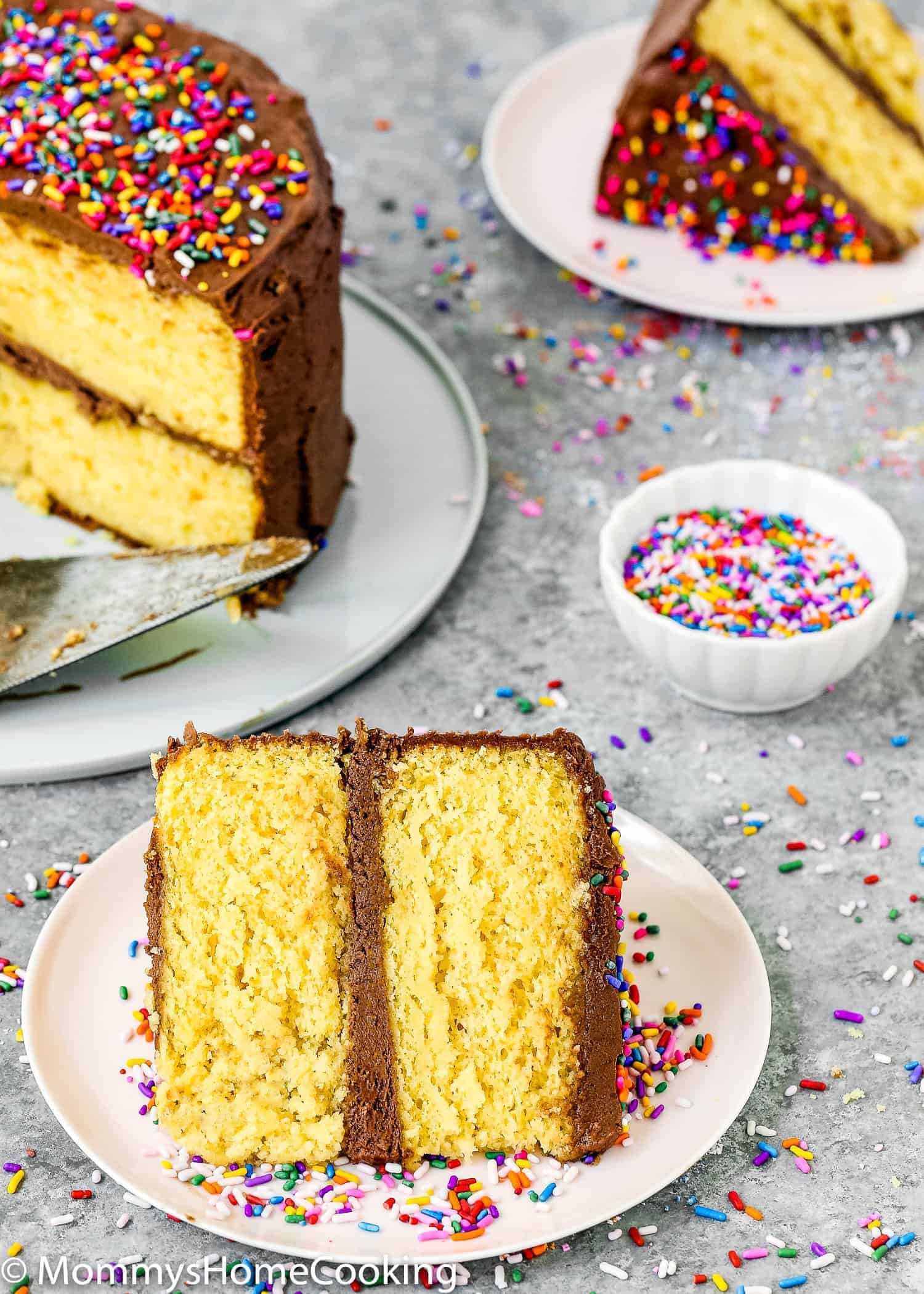
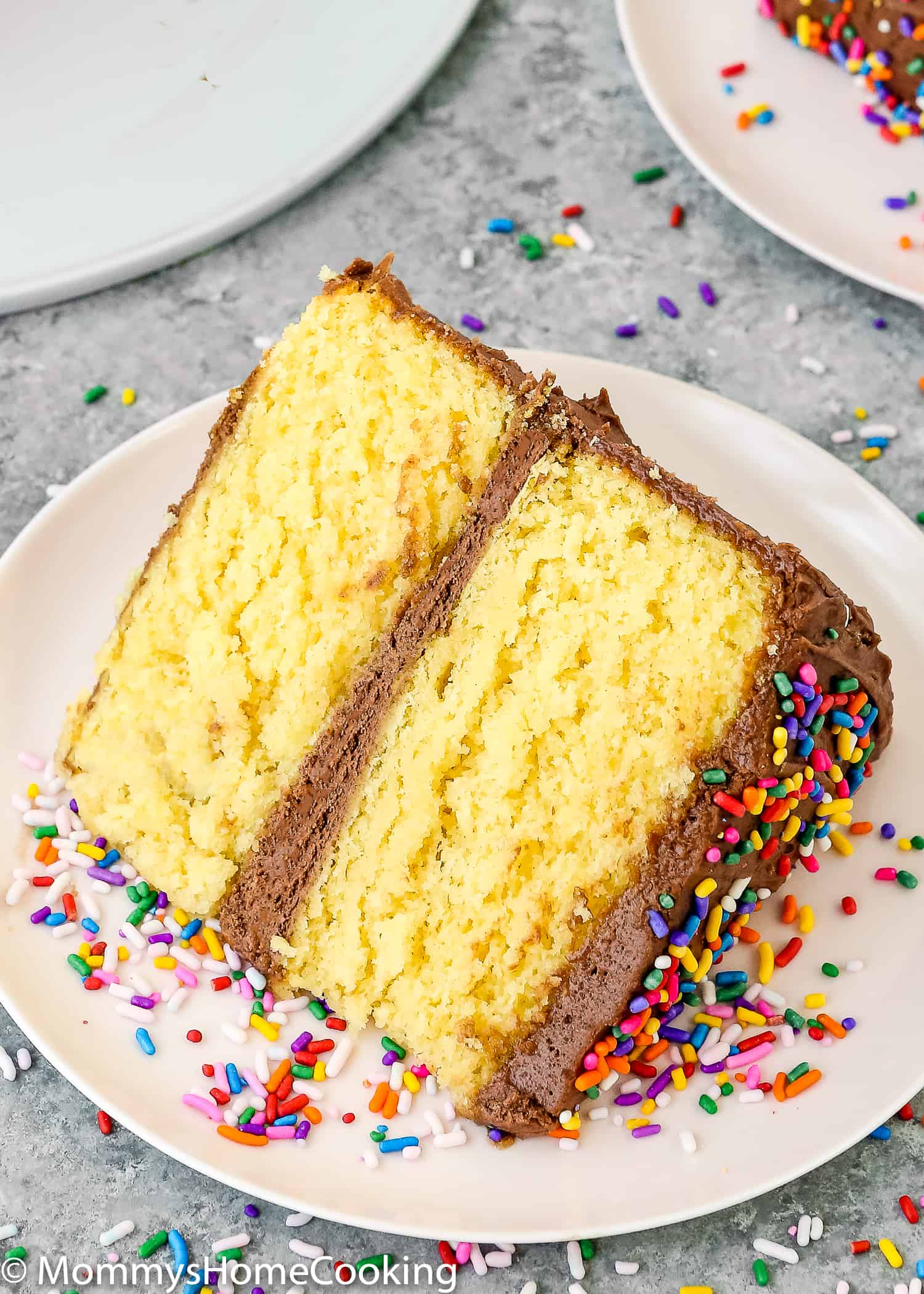
Cake mix bake slice on a pink plate with sprinkles.

Oriana’s Thoughts On The Recipe

Oriana Romero, creator of Mommy's Home Cooking and egg-free baking queen.

Many years ago, when my daughter was first diagnosed with food allergies, I needed to bring a safe cake to school — fast. I tried banana, applesauce, and just about every substitute I could find, and nothing was good enough. After many, many tests in my kitchen, I finally landed on yogurt — and it changed everything. It gives you the moist, fluffy, perfectly structured box cake you’d expect, without a single egg. For busy families who need a quick, reliable solution that keeps every single person at the table safe, this is the one.

Why You’ll Want to Try My Recipe

  • Moist and fluffy texture every time — no dry, crumbly cake
  • Uses just ONE ingredient you almost certainly already have
  • Works with any box cake mix — vanilla, chocolate, spice, funfetti, lemon, you name it
  • Sturdy enough to cut into layers and frost without falling apart
  • Ready in under an hour, start to finish
  • 100% egg-free — safe for egg allergy families
  • No weird aftertaste — the yogurt completely disappears into the batter
Handwritten text on a light pink background reads "xo, Oriana," evoking the warmth found in sharing Authentic Venezuelan Sancocho (Sancocho Venezolano) with loved ones.
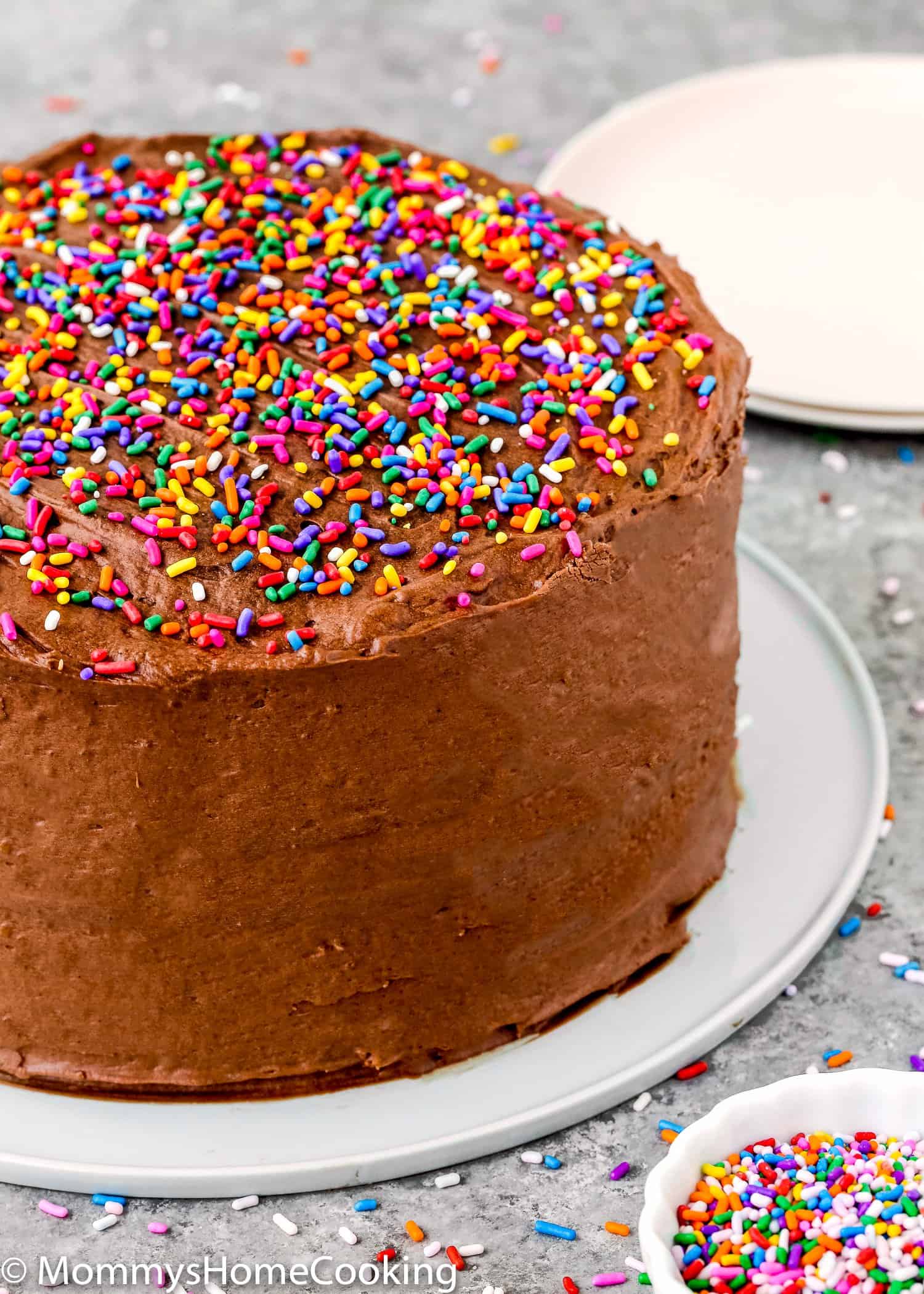
Egg-free cake make with a cake mix box, covered with chocolate buttercream and sprinkles.

What Do Eggs Actually Do In Box Cake Mix?

Before we talk about how to replace them, it helps to understand why eggs are in box cake mix in the first place — because that’s the key to replacing them well.

Eggs do three things in cake: they bind the batter together so it holds its shape, they add moisture so the cake isn’t dry, and they contribute to lift so the cake rises and stays fluffy. When you remove eggs without replacing those functions, you end up with a dense, dry, crumbly mess that falls apart the moment you try to frost it.

The good news? Plain yogurt handles all three jobs remarkably well. The fat in yogurt adds moisture, the protein helps bind the batter, and the slight acidity reacts with the leavening already in the box mix to give you that lift. That’s why it works when so many other substitutes don’t.


Ingredients You’ll Need, Substitutions & Notes

Five labeled ingredients on a countertop show How to Make Box Cake Mix Without Eggs: cake mix box, oil in a bowl, flour in a cup, yogurt in a bowl, and water in a measuring cup.
  • Cake Mix: There is a wide variety of cake box mixes. I have tested this recipe with American cake mixes (around 450 g per box), such as Betty Crocker, Pillsbury, and Duncan Hines. 
  • Flour: Since I’m not using eggs, I like to add 1/4 cup of all-purpose flour to give the cake more structure. After much testing, I found that without flour, the cake is too fluffy and difficult to frost or decorate. So, adding flour is totally optional but highly recommended. The extra flour gives the cake more structure, which is especially important if you plan to cut the cake into layers or frost it heavily. Don’t skip it.
  • Yogurt: 1/4 cup (60 g) of plain regular yogurt is enough to substitute up to 3 eggs in a cake mix box. This is your egg substitute. Use ¼ cup (60 g) of plain, unflavored yogurt for every egg the box calls for. Do not use Greek yogurt (too thick and dense), and definitely do not use flavored yogurt — vanilla-flavored yogurt sounds harmless, but it throws off the balance of sweetness in the cake.
  • Oil and Water: Most cake mix boxes call for oil and water. You’ll need the same quantity the box calls for.

Substitutions — What I Tested And What I Recommend

I want to be honest with you here, because a lot of websites will give you a long list of egg substitutes for box cake mix and tell you they all work. They don’t all work equally, and some of them don’t work well at all for this specific application. I’ve tested them in my kitchen, and here’s the truth:

Plain yogurt (plus extra flour) — This is the one I recommend. Just ¼ cup of plain whole milk yogurt replaces ALL the eggs in the box — whether the recipe calls for 1, 2, or 3. That’s it. One flat amount for the whole mix. And my magic combination for success is that yogurt PLUS a little extra flour — together, they give you the moisture AND the structure you need. This is the method I’ve been testing for years and the only one I trust for a cake sturdy enough to layer and frost.

Flax egg — I don’t recommend it for box cake. A flax egg (1 tablespoon ground flaxseed + 3 tablespoons water) works fine in some baked goods, but in a box cake mix, the result is noticeably rubbery and chewy. The texture is off in a way that’s hard to describe but impossible to ignore once you taste it. It’s fine if it’s your only option, but it’s not something I would choose.

Applesauce — Only if you’re making a spice cake or carrot cake. Applesauce does add moisture and some binding, but it also adds a very clear apple flavor to your cake. For a vanilla cake, lemon cake, or funfetti cake, that apple flavor does not belong there. If you’re making a spice cake where that flavor blends in, it can work — but it’s not a neutral substitute.

Banana — Same problem as applesauce. Banana adds moisture, but it takes over. You will taste banana in your cake, and it will change the sweetness too. Again, fine for a banana cake on purpose, not a great choice when you just need to replace an egg.

Sparkling water or soda — I would not use this if you need to frost the cake. The carbonation gives you a very light, airy rise, and the cake looks beautiful coming out of the oven. But it has no binding ability at all. The result is a very crumbly, fragile cake with almost no structure — when you try to cut it into layers or apply frosting, it falls apart. If you’re making a casual snacking cake that goes straight from pan to plate, maybe. But for a birthday cake or anything you need to frost? No.

Bottom line: Yogurt is the substitute that delivers every time, and it’s the method I stand behind.

My #1 Tip To Make A Cake Mix Box Without Eggs

Add 1/4 cup of all-purpose flour to improve the cake’s texture. After a lot of testing, I noticed that when I don’t add the extra flour, the cake is TOO fluffy and difficult to frost/decorate. So, adding the flour is totally optional but highly recommended. 

Food Allergy Swaps

This recipe is naturally egg, nut, peanut, and sesame-free, making it suitable for most dietary needs. However, always check labels for hidden allergens.

  • Dairy-Free: To make this recipe dairy-free, you can easily swap out the dairy ingredients for non-dairy alternatives.
    • Yogurt: Use your favorite brand of plain, unsweetened non-dairy yogurt.
  • Gluten-Free: Use a gluten-free cake mix. I haven’t personally tested this method with a gluten-free cake mix, so I can’t promise results — GF mixes behave very differently and may need adjustments to the moisture ratio. That said, some readers have reported making it successfully with their favorite GF mix! If you try it, let me know in the comments — I’d love to hear how it turns out.

How To Make A Cake Mix Box Without Eggs: Step-by-Step

Please check the recipe card at the bottom of the post for exact quantities and detailed instructions (scroll down).

Step 1 – Preheat the Oven and Prepare the Pan

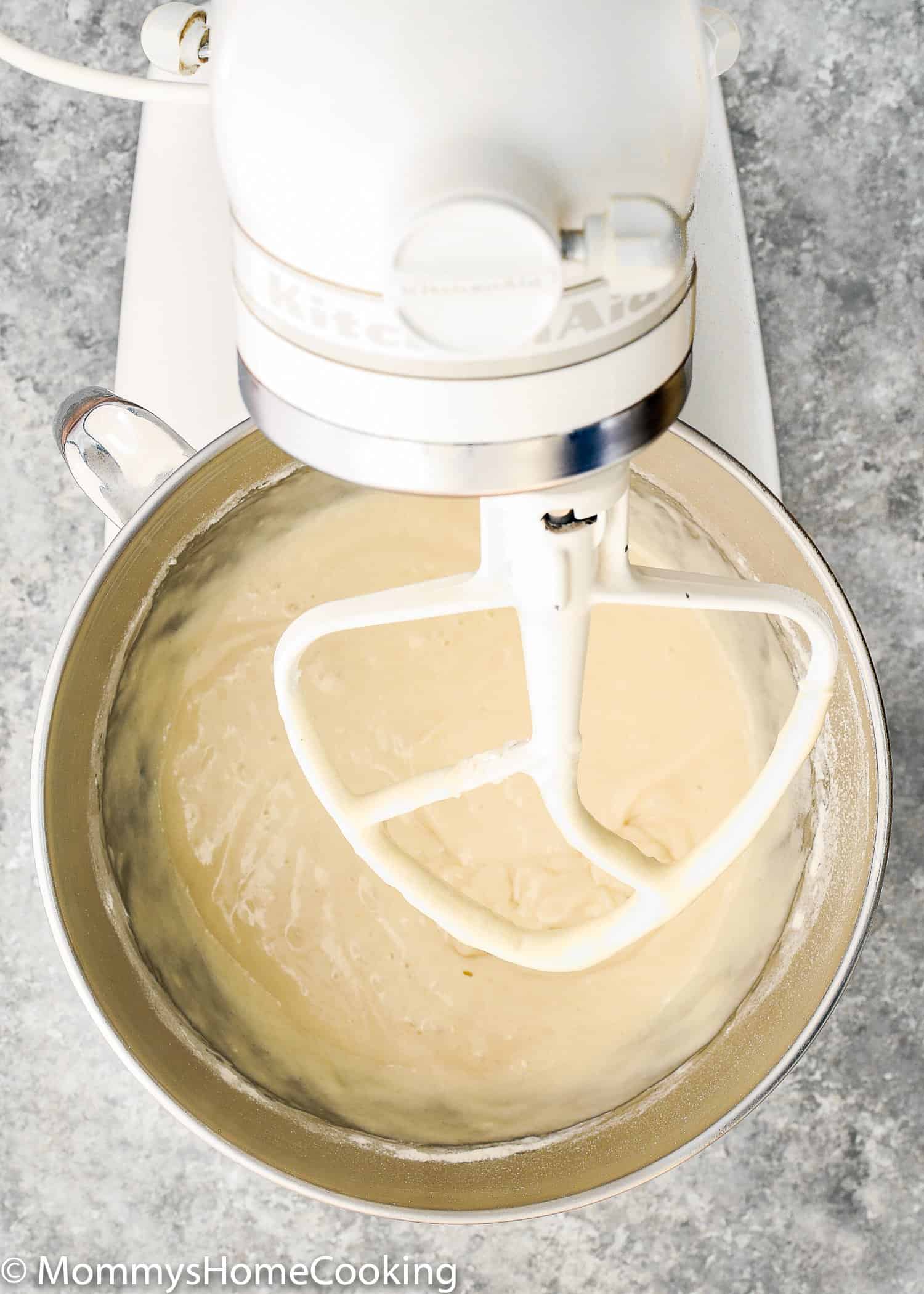
Step 2 – Mix the Ingredients

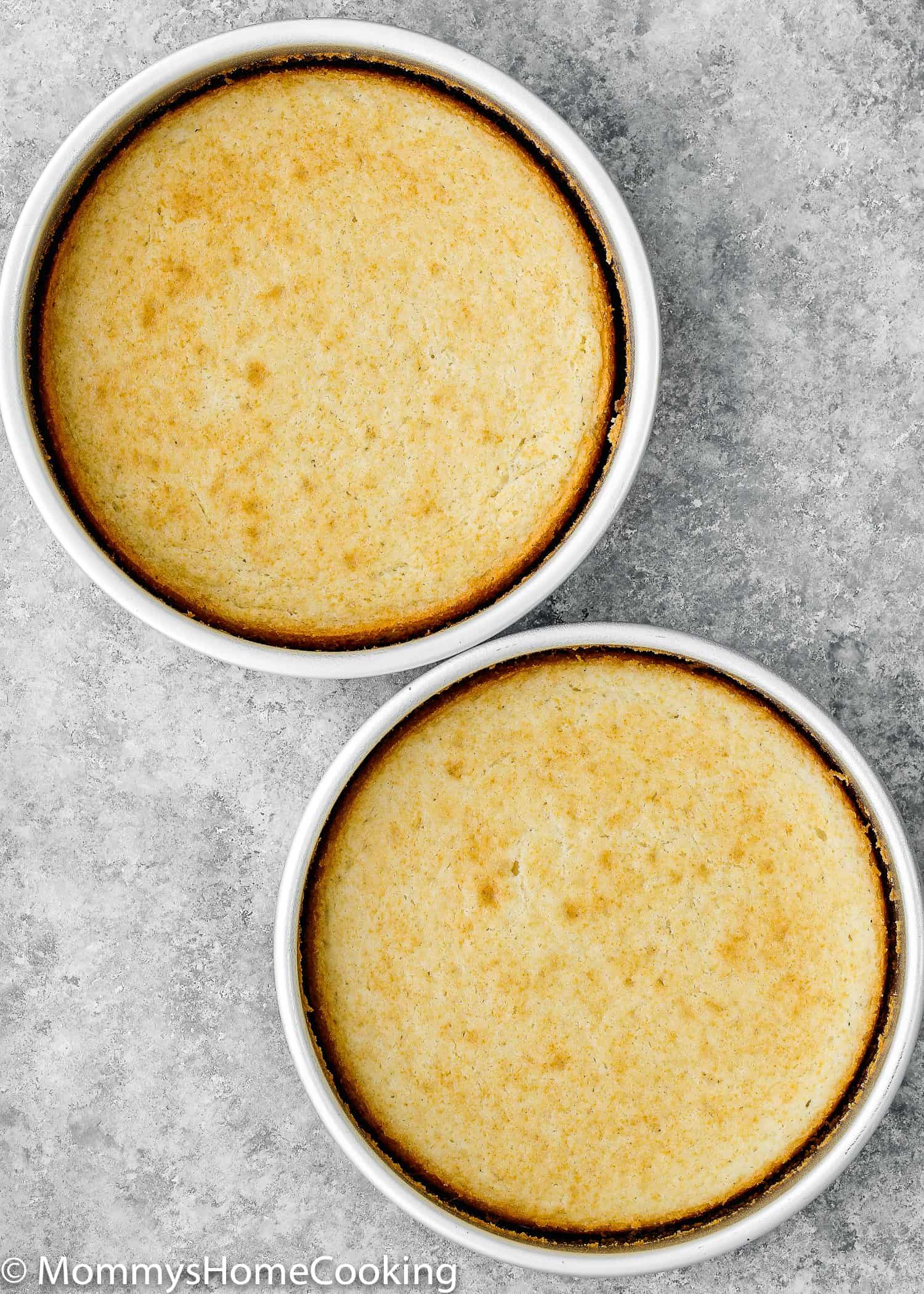
Step 3 – Bake

Oriana’s Tips

  • Use plain whole milk yogurt — not Greek, not flavored. Full-fat plain yogurt is the sweet spot. It’s thick enough to bind the batter, fatty enough to add moisture, and neutral enough to disappear completely into the flavor. Greek yogurt is too thick and too high in protein — it can make your cake dense. Flavored yogurt throws off the sweetness balance of the recipe. Plain whole milk yogurt. That’s it.
  • Dont skip the extra flour for structure. When you remove the eggs, you lose some of that structural support. Extra all-purpose flour replaces enough of that structure to give you a cake that holds together cleanly — especially important if you’re cutting layers or doing a heavy frosting job.
  • Don’t overmix the batter. This is the most common mistake I see. Once the yogurt goes in, mix just until everything is combined — maybe 30 seconds. Overmixing develops gluten and makes the cake tough. The batter should look smooth and thick, not silky. Stop when you don’t see dry streaks anymore.
  • Start checking your oven 5 minutes early. Set a timer for 5 minutes before the box’s minimum bake time and check with a toothpick. You’re looking for a toothpick inserted in the center to come out clean or with just a few moist crumbs.
  • Cool the cake completely before frosting. I know it’s hard to wait, but this is non-negotiable. Egg-free cakes can be a little more delicate while still warm. Give the cake at least 20–30 minutes in the pan before turning it out, and another 30–40 minutes on a wire rack before you frost. If you try to frost a warm cake, the frosting melts, slides, and the cake can break. Patience here pays off.

Frosting Ideas

This cake plays well with almost any frosting. Here are my favorites:

How Many Cake Mixes Do I Need?

  • One 8 or 9-inch round pan = 1 cake mix
  • Two 8 or 9-inch round pans = 2 cake mixes
  • One 13″ x 9″ pan = 1 cake mix
  • Bundt pan = 2 cake mixes. Note: To prevent the cake from spilling out the top, only fill the pan about 2/3 of the way.
  • 12 Cupcakes = 1 cake mix

Bake Time Suggestions

Every oven is different, so baking times must always be taken with a grain of salt. Oven thermostats can be wildly off, and that will all affect baking time. The cake is ready when a toothpick comes out clean when you insert it into the middle. 

  • Two 9″ round pans = 25-30 minutes
  • One 13″ x 9″ pan = 28-35 minutes
  • Bundt pan = 38-45 minutes
  • Cupcakes = 12-18 minutes
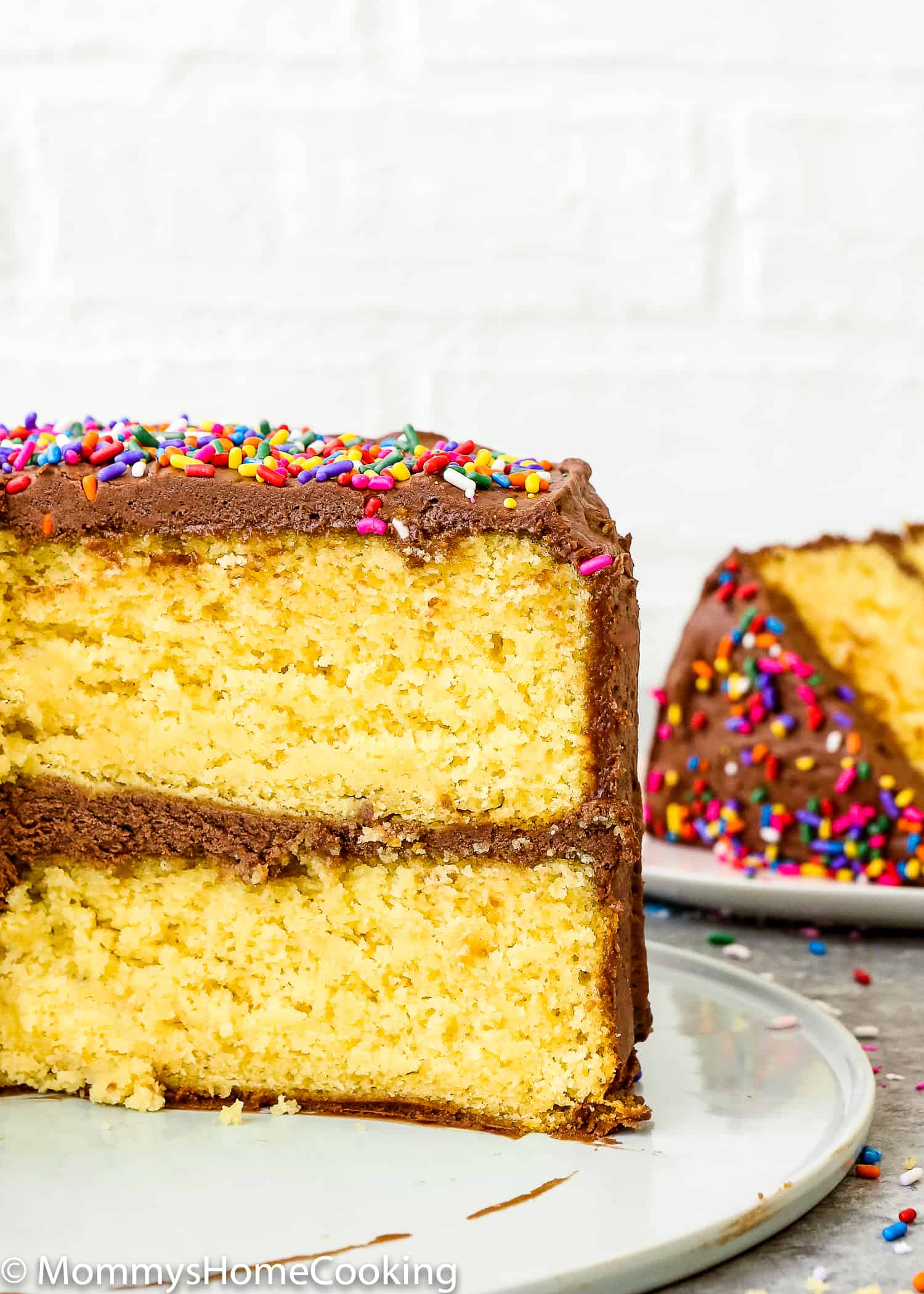
two layer cake mix cake sliced

Storing and Freezing Instructions

At room temperature: Store your frosted or unfrosted cake covered tightly at room temperature for up to 3 days. A cake dome or an overturned bowl works perfectly.

In the refrigerator: If your cake is frosted with a perishable frosting (cream cheese, whipped cream), store it in the refrigerator for up to 5 days. Bring to room temperature for about 30 minutes before serving for the best texture.

Freezing the cake layers: Cool completely. Wrap each unfrosted layer tightly in plastic wrap, then in a layer of aluminum foil. Freeze for up to 3 months. To thaw, transfer to the refrigerator overnight or leave at room temperature for 2–3 hours still wrapped.

Freezing a frosted cake: Freeze the whole frosted cake uncovered for 1–2 hours until the frosting is firm, then wrap tightly and return to the freezer for up to 2 months. Thaw overnight in the refrigerator.

Frequently Asked Questions

What can I use as a substitute for eggs in a box of cake mix?

Replace up to 3 eggs with 1/4 of plain yogurt (total). 

Can you make a Betty Crocker cake mix without eggs?

Yes, you can! To do so, substitute the three eggs called for in the box for 1/4 cup of plain regular yogurt + 1/4 cup (35 g) all-purpose flour.

Can I apply the same method to make a brownie mix?

For a brownie mix, I recommend following my How to Make a Brownie Mix Without Eggs recipe.

Can I use any box cake mix for this method?

Yes! Plain yogurt works as an egg substitute in any box cake mix — vanilla, chocolate, funfetti, lemon, spice, red velvet, carrot cake, you name it. The amount is always the same: ¼ cup of plain whole milk yogurt for the entire box.

Can I use Greek yogurt instead of regular yogurt?

I don’t recommend it. Greek yogurt is significantly thicker and higher in protein than regular plain yogurt, which can make your cake denser and heavier than you want. It also tends to be more acidic, which can affect how the leavening in the box mix performs. Stick with plain whole milk yogurt for the best results.

How much yogurt do I need for the whole box?

Just ¼ cup (60 g) of plain whole milk yogurt — for the entire box, replacing all the eggs, whether the recipe calls for 1, 2, or 3. You don’t need to calculate per egg. One flat amount, every time.

Will my cake taste like yogurt?

No — the yogurt flavor completely disappears once the cake is baked. You will not taste it at all. What you will notice is that the cake is especially moist and tender. That’s the yogurt doing its job.

Can I make cupcakes with this method?

Absolutely. Use the same ratio (¼ cup yogurt per egg), pour the batter into lined cupcake tins, and bake according to the box instructions — checking about 5 minutes early since cupcakes can bake faster than a full cake. You’ll get beautifully domed, moist cupcakes every time.

Does this work for a layered birthday cake?

Yes, and this is one of the things I love most about the yogurt method — the extra tablespoon of flour gives the cake enough structure to hold up to cutting into layers and applying frosting. I’ve made stacked birthday cakes with this method many times, and they hold together beautifully.

Is this recipe safe for someone with an egg allergy?

Yes. Plain whole milk yogurt contains no egg. Always check the labels on your specific box of cake mix and your yogurt for any “may contain” cross-contamination warnings, as manufacturing facilities vary. If you’re baking for someone with multiple allergies, check the full ingredient list on the box mix carefully.

cake mix cake slice on a plate

❤️ Love what you see? Subscribe to Mommy’s Home Cooking email list, so you’ll never miss a recipe! Follow along on Instagram, Pinterest, and Facebook for more fun! 

Recipe Card

How to Make a Cake Mix Box without Eggs | Mommy's Home Cooking

How to Make a Cake Mix Box without Eggs

Oriana Romero
This easy egg-free box cake uses plain yogurt as the only egg substitute — and the result is moist, tender, and sturdy enough to layer and frost. One ingredient, zero fuss, every single time.
4.44 from 371 votes
Prep Time 5 minutes
Cook Time 25 minutes
Total Time 30 minutes
Servings 10 servings

Video

Equipment

Important

• For best results, I highly recommend using a kitchen scale to measure the ingredients.

Ingredients
 

  • 1 Cake mix box (450 g box) (see notes)
  • 1/2 cup (120 ml) vegetable or canola oil (or the quantity the box calls for)
  • 1 cup (240 ml) water (or the quantity the box calls for)
  • ¼ cup (60 g) plain yogurt
  • ¼ cup (35 g) all-purpose flour, optional (see notes)

Instructions
 

Prep your pan and preheat the oven:

  • Preheat your oven to 350°F (180°C). Line an 8-inch (20 cm) round cake pan with parchment paper and lightly grease with baking spray. The pan should feel lightly coated — not dripping.

Mix the batter:

  • In a large bowl, combine the cake mix, water, oil, yogurt, and extra flour (if using). Mix until everything is just combined — the batter will look thick, smooth, and slightly glossy, similar to thick pancake batter. Do not overmix. Stop as soon as you no longer see dry streaks — about 30 seconds of mixing is plenty.

Pour and bake:

  • Pour the batter into the prepared pan (s). Bake as directed on the box, or until a toothpick inserted in the center comes out clean or with just a few moist crumbs, not raw batter.

Cool before unmolding and frosting:

  • Cool in the pan for 10 minutes before turning out — this gives the structure time to set, so the cake doesn't break. Transfer to a wire rack and cool completely before frosting. If you frost a warm cake, the frosting will melt and slide.
Oriana’s Notes
 
Flour: Since there are no eggs, the extra ¼ cup of flour adds structure to the cake. Without it, the cake can be too fluffy and difficult to frost or layer. It’s optional, but I highly recommend it.
 
Yogurt: ¼ cup (60 g) of plain whole milk yogurt is enough to substitute all the eggs in a standard box mix — whether the box calls for 1, 2, or 3 eggs. I do not recommend using Greek yogurt or flavored yogurt.
 
Cake Mix: Tested with American cake mixes (around 450 g per box): Betty Crocker, Pillsbury, and Duncan Hines. Results may vary with other brands or sizes.
 
Dairy-Free: To make this recipe dairy-free, you can easily swap out the dairy ingredients for non-dairy alternatives. Use your favorite brand of plain, unsweetened non-dairy yogurt.
 
 
Gluten-Free Mix: Not personally tested. Some readers have reported success using a GF cake mix with this method, but the moisture balance may need adjusting. If you try it, let me know in the comments!
 
Every oven is different — start checking 5 minutes before the minimum bake time on the box.
 
Store: To store the cake layers, let the cakes cool completely. Wrap them with plastic wrap and store them at room temperature for up to 2 – 3 days. For longer storage, cover the cake tightly and store it in the refrigerator for up to 5 days.
 
Freeze: To freeze the cake layers, let the cakes cool completely. Next, wrap with two layers of plastic wrap, followed by a layer of aluminum foil. Store it in the freezer for up to 3 months. Allow the cake to thaw in the plastic wrap and foil overnight in the refrigerator. Finally, bring it to room temperature before slicing and serving. Consider that the cakes will lose part of their fluffiness if refrigerated or frozen.
 
How Many Cake Mixes Do I Need?
  • One 8 or 9-inch round pan = 1 cake mix
  • Two 8 or 9-inch round pans = 2 cake mixes
  • One 13″ x 9″ pan = 1 cake mix
  • Bundt pan = 2 cake mixes. Note: Only fill your pan about 2/3 of the way to avoid it from spilling out the top.
  • 12 Cupcakes = 1 cake mix
 
Bake Time Suggestions:
Every oven is different, so baking times must be taken with a grain of salt. Oven thermostats can be wildly off, and that will all affect baking time. The cake is ready when you insert a toothpick into the middle of the cake, and it comes out clean. 
  • Two 9″ round pan = 25-30 minutes
  • One 13″ x 9″ pan = 28-35 minutes
  • Bundt pan = 38-45 minutes
  • Cupcakes = 12-18 minutes
 
Pro-Tips:
  • Use plain whole milk yogurt — not Greek, not flavored. Greek yogurt is too thick and can make the cake dense. Flavored yogurt throws off the sweetness. Plain whole milk yogurt disappears completely into the batter — you will not taste it.
  • Don’t skip the flour. It’s the difference between a cake you can frost beautifully and one that crumbles the moment you try. One bowl, one extra scoop — worth every second.
  • Don’t overmix. Once the yogurt goes in, mix just until you don’t see dry streaks. Overmixing develops gluten and makes the cake tough. Thick, smooth batter = perfect cake.


I appreciate your feedback, and it helps others, too!

Recipe reviews on the website are extremely valuable to other readers online. So, please don’t forget to give it a 5-star rating below.

Nutrition

Calories: 299kcalCarbohydrates: 45gProtein: 2gFat: 12gSaturated Fat: 9gSodium: 380mgPotassium: 33mgSugar: 22gVitamin A: 5IUCalcium: 117mgIron: 1.2mg

Nutrition information provided is an estimate and will vary based on cooking methods and brands of ingredients used.

Share your Creations!Tag @mommyshomecooking on Instagram and hashtag it #mommyshomecooking or Join my Private Facebook Group
Course Dessert
Cuisine American
Calories 299
Keyword Cake Box dessert eggfree Eggless recipe

Eggless Baking Frequently Asked Questions

You’ve asked, and I’ve answered! Read on for a handful of answers to the most frequently asked questions about eggless baking.

More Recipes You’ll Love

Originally published in May 2018, this post has been updated in September 2024 to include more helpful information, while the recipe itself remains unchanged.

More Recipes To Explore!

4.44 from 371 votes (321 ratings without comment)

Leave a Reply

Your email address will not be published. Required fields are marked *

Recipe Rating


This site uses Akismet to reduce spam. Learn how your comment data is processed.

308 Comments

    1. Hello Vanessa! Great question! Yes, you can use Greek yogurt, but I actually prefer regular plain yogurt—especially if the Greek yogurt is very thick. If you do use Greek yogurt, you might want to thin it out with a little milk so the batter doesn’t end up too thick 😊

    1. Hello Carol! That means so much—thank you! I’m so happy this one stood out for you. Egg-free baking can be hit or miss, so hearing this is the best you’ve tried really makes my day 💛